The buyer is usually indifferent to which system processed the payment for coffee. They see the debit in the app, the seller waits for the money in the account. But between these two events there is infrastructure that financial organizations pay for. It is its cost that the Central Bank of Azerbaijan is changing. Whether a person at the checkout notices the reform depends on how banks use the savings.
What will change from April
On October 14, the Central Bank announced new tariffs that will take effect on April 1, 2027. The decision was adopted on September 15. This concerns the processing of operations in payment systems, not the commission for transfers set for all citizens. This is a significant distinction: a bank's costs and the price of a service for a client are related, but they do not coincide.
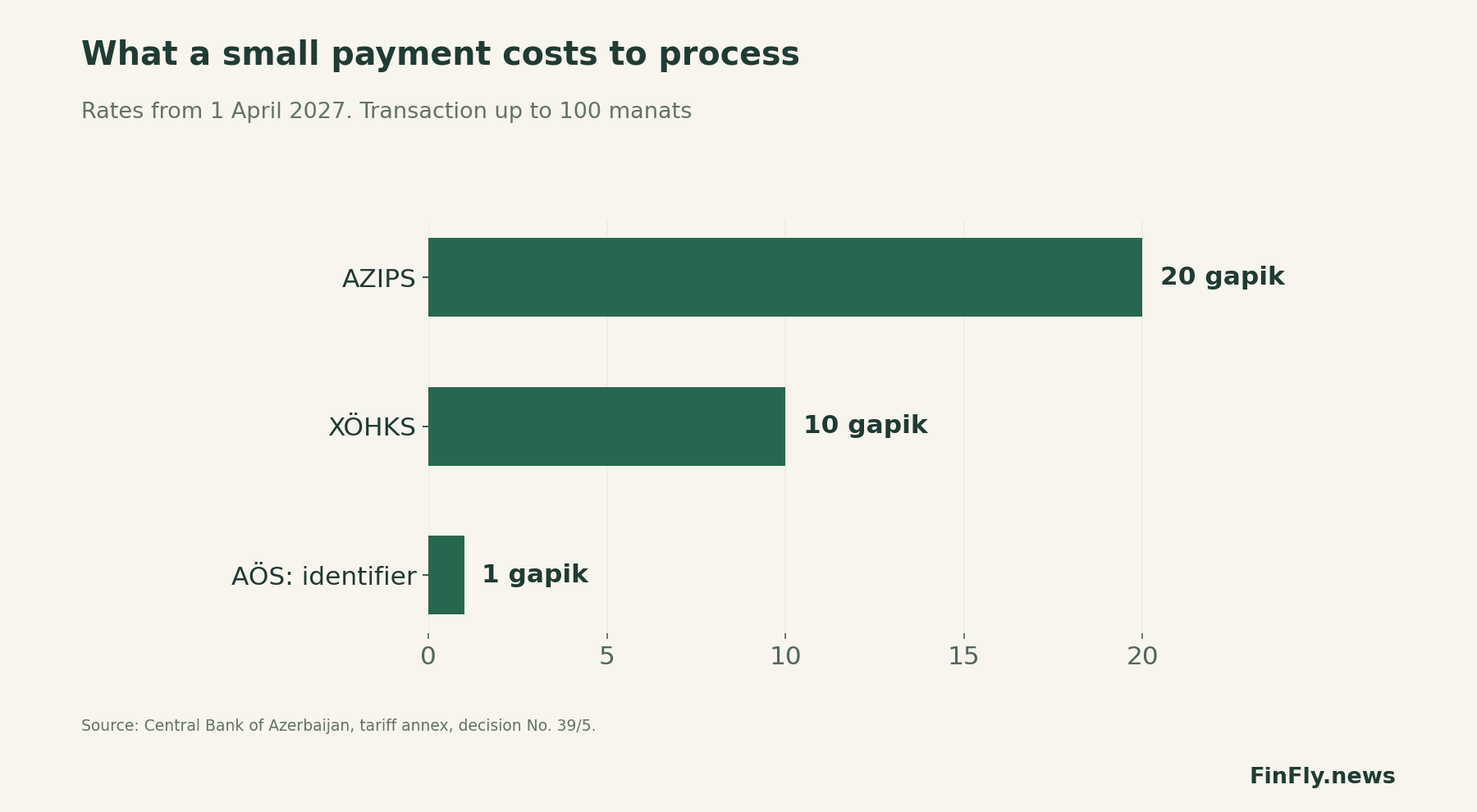
In the official table, for a payment of up to 100 manats, processing through AZIPS costs 20 gapiks, through XÖHKS 10 gapiks, and a transfer in the instant payment system using an identifier 1 gapik. This is a comparison of individual tariffs, not a statement that the systems are fully interchangeable. They have different tasks, conditions and participants. For a specific operation, the bank must choose an available and suitable route.
Why one gapik does not mean low merchant fees
A shop does not only buy the recording of an entry between accounts. It needs payment acceptance, crediting of funds, reconciliation, refunds, servicing and protection against fraud. In the card model, an interbank fee is added. Therefore, transferring one low figure from the Central Bank's table into a promise to business would be a mistake.
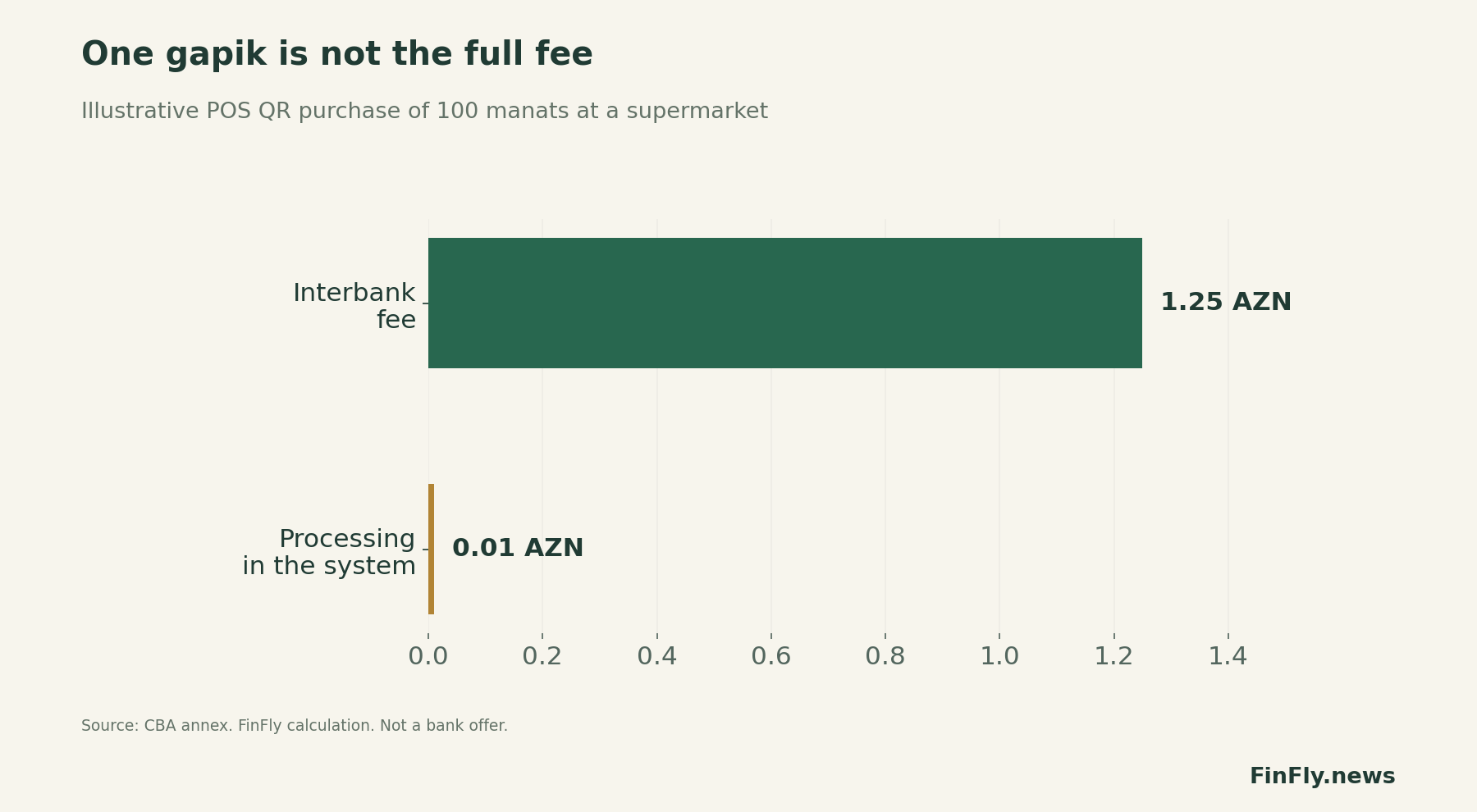
This is also visible within instant payment tariffs. For a QR operation of up to 100 manats, a separate processing tariff of 0.01 manat is provided. But the table also contains interbank rates for POS: for supermarkets and pharmacies 1.25%, for transport 0.20%, for other categories, including restaurants, 1.50%. The recipients of these payments differ. An illustrative purchase of 100 manats in a supermarket yields 1.25 manats of interbank fee and 0.01 manat of processing. This is not yet the merchant's final commission.
For an entrepreneur, the decisive factors are the full cost of accepting payment and the time it takes for money to reach the account. A tariff with a low percentage may prove inconvenient with slow crediting or expensive integration. And a more expensive payment acceptance sometimes pays off if it reduces customer refusals. The financial result depends on the shop's turnover, average transaction value and share of successful payments.
Banks gain a choice
A reduction in infrastructure expenses can be directed into profit, lower customer commissions or product development. The regulator's decision by itself does not determine which path each participant will choose. Competition, the client's ability to change banks and the transparency of offers matter here.
For large banks, the savings add up from millions of operations. For small participants, cheap access to settlements may make it easier to launch new services. But payment processing remains only part of expenses: licensing, information security, support and compliance do not disappear. Therefore it is wrong to think that any startup after the tariff change will be able to compete immediately with an existing bank on price.
The segment of small payments is especially interesting. A fixed commission takes a larger share of their amount than of large ones. If banking products pass part of the savings on to the client, frequent everyday operations will benefit. However, for this, instant payments must be convenient in apps and familiar to sellers. A cheap route that is difficult to use does not change everyday behavior.
When tariff reductions will reach business
The effect of the new tariffs after April 1, 2027 will show up in the full cost of accepting payment, the share of instant payments and the speed of crediting money. For small business, refund commissions and servicing conditions at low turnover are also significant. If these expenses remain the same, the reduction in infrastructure tariffs will give savings primarily to banks, not to merchants.
The reform creates an opportunity to lower the cost of settlements. Whether it turns into savings for buyers and entrepreneurs will become clear from bank contracts and payment practice. For now, the main result of the Central Bank's decision lies elsewhere: market participants have been given a clear deadline to review their products. Competition between banks for retail enterprises will determine what part of the savings passes into customer tariffs.