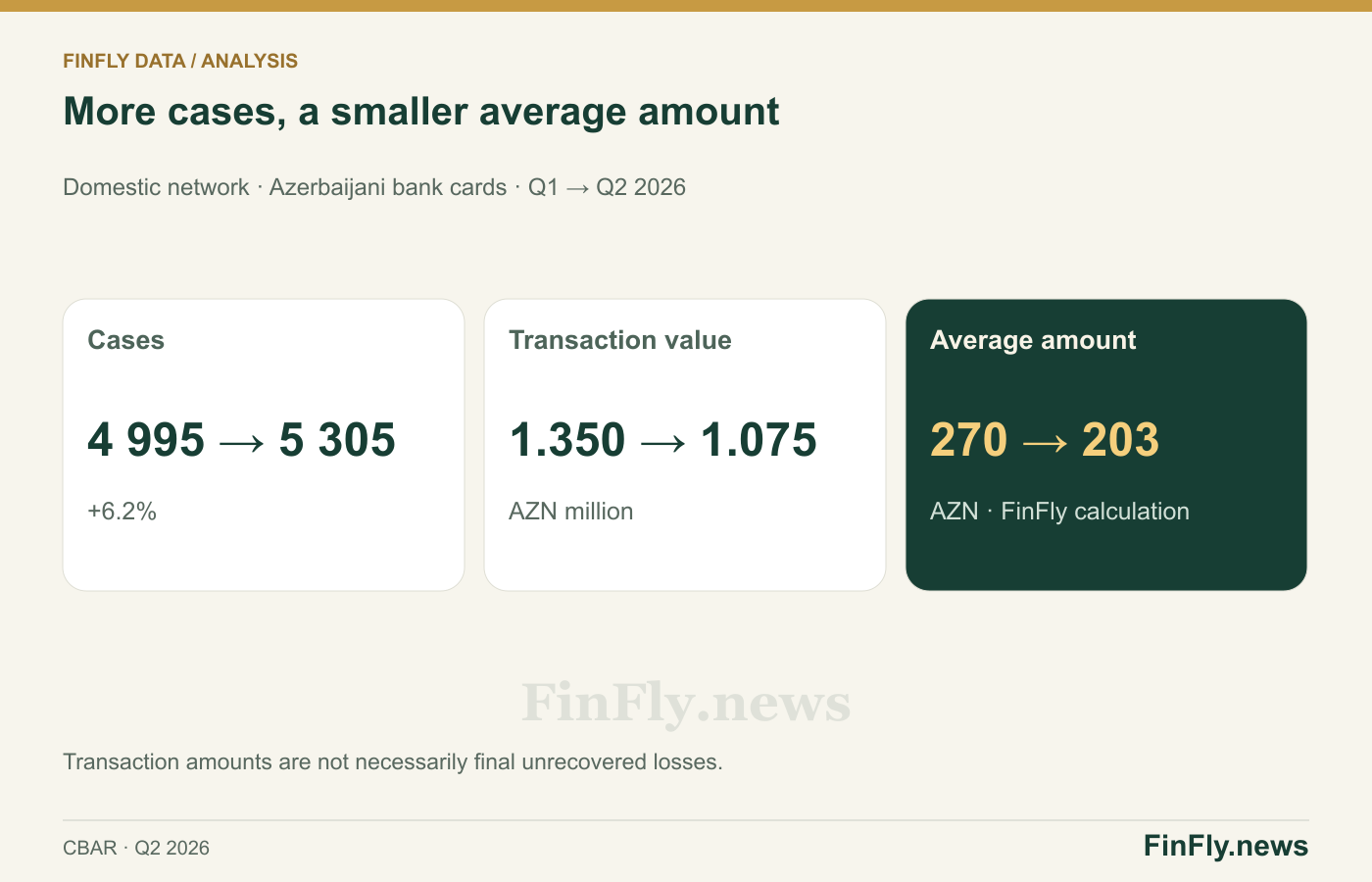
A smaller total value of card fraud does not mean fewer people are encountering it. Azerbaijan’s domestic payment network recorded 5,305 fraudulent card transactions in the second quarter of 2026, up from 4,995 in the first. Their combined value nevertheless fell from AZN 1.35 million to AZN 1.07 million. Preventing incidents and limiting their size are different tasks.
We compared transaction counts and amounts in the Central Bank’s quarterly statistics. The average recorded domestic case fell from approximately AZN 270 to AZN 203, a decline of about one quarter. This is our calculation from aggregate figures, not a published estimate of the loss suffered by an individual customer.
Smaller transactions can still create more work
The lower average is compatible with several explanations: changes in fraud techniques, the transaction mix or the effectiveness of particular controls. The report does not separate these effects. Attributing the result solely to better bank security would go beyond the evidence.
The operational distinction matters. Even a small disputed payment can require a blocked card, a bank investigation, restored account access and a review of other transfers. More incidents can therefore mean more work even as the total amount declines. The statistics do not disclose case-handling costs, so we cannot attach a monetary estimate to that burden.
Account access is the critical boundary
In the breakdown of domestic incidents, account takeover rose from 21.4% to 33.9%. The Central Bank defines it as a third party gaining full access to mobile banking, an electronic wallet or another payment instrument through disclosed sensitive information, malware or remote-control software. That exposure can be wider than the compromise of a single card’s details.
E-commerce and mobile applications accounted for 93.1% of domestic incidents. This identifies the channel where fraudulent transactions occurred, not the probability of fraud on an ordinary online purchase. Without the total number and value of digital payments, we cannot establish whether risk per transaction increased.
For cardholders, the practical priority is to protect banking-app access and avoid approving actions at an unknown caller’s direction. For banks, device changes, access recovery and unusual transfers are useful to examine together, rather than judging each payment solely by its size. These are control priorities, not a claim about what every bank currently implements.
Domestic and overseas patterns differ
In overseas payment networks, cases involving cards issued by Azerbaijani banks fell from 6,020 to 3,633. Their value declined from AZN 325,300 to AZN 289,400. The average amount there rose from roughly AZN 54 to AZN 80. Combining the two networks into a single headline would conceal their opposing changes.
Domestic and overseas refer to the payment network, not the victim’s nationality or the offender’s location. The amount of fraudulent transactions is also not necessarily the final unrecovered loss: the tables do not report reimbursements.
We would not judge progress from the lower total alone. The next release should be assessed against case counts, average amounts and the account-takeover share. A sustained improvement across several measures would be more convincing than a favourable movement in one.