The regulator expects progress in talks before year-end. For merchants, the central question is the total cost of accepting payments.
Three parts of the payments agenda
The Central Bank of Azerbaijan is holding talks with Visa and Mastercard on reducing fees. At his 29 October press conference, Taleh Kazimov said he expected progress before year-end. He did not announce agreed new fee levels.
QR payments are another priority. According to the governor, banks are already required to support their acceptance through POS terminals. He encouraged merchants to discuss lower pricing for this payment method with their servicing banks.
Testing of a national payment instrument is also continuing. Subject to successful trials, certain payments are planned to run through AniÖdəniş from next year. This is a conditional rollout plan, not a statement that the new service is available to all users.
| Initiative | Status described by the governor |
|---|---|
| Visa and Mastercard | Fee negotiations |
| QR payments | Wider acceptance and pricing discussions |
| National instrument | Testing; rollout depends on results |
What determines merchant savings
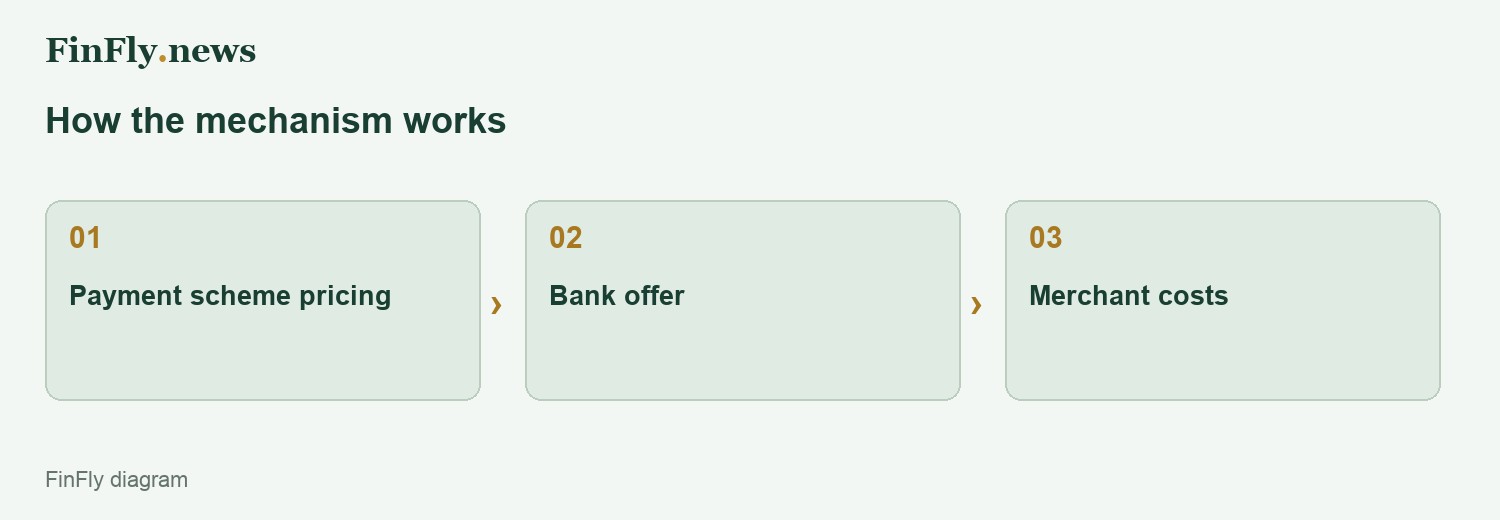
An international scheme’s fee and a merchant’s final acquiring tariff sit at different levels of the cost structure. A reduction in one component can create room for repricing, but actual savings depend on the offer made by the servicing bank.
Merchants need to compare percentage fees, fixed charges, refund terms and settlement times. A lower rate has limited impact if customers rarely use that payment method or if connection involves additional costs.
The relevant measure is the effective cost of accepting payments relative to revenue. Wider QR infrastructure provides an alternative settlement channel; its impact on business costs will depend on bank pricing and customer adoption.