
According to the State Customs Committee of Azerbaijan, for January–August 2026 the value of natural gas exports was 5,710.87 million dollars, and the value of crude oil exports was 9,281.89 million dollars. Physical volumes are given in different units: 16.38 billion cubic meters of gas and 14.68 million tonnes of oil, so a direct comparison of volumes using these data is impossible. Gas is behind oil in its value contribution to total exports, which for the same period reached 21,815.04 million dollars. This is not an estimate of a specific company's revenue and not proof of the causes of the gap — only accumulated customs observations.
What the accumulated figures show
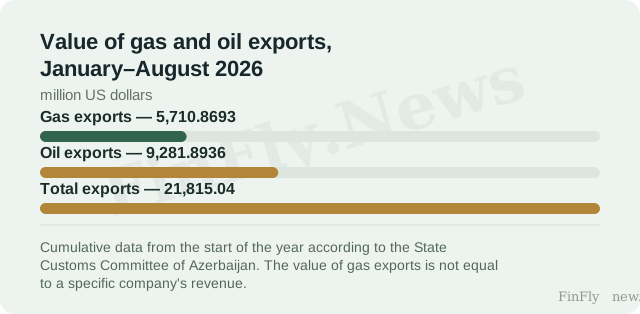
Customs records value and volume separately, on a cumulative basis from the start of the year. Gas exports brought 5,710.87 million dollars with 16.38 billion cubic meters. Oil exports — 9,281.89 million dollars with 14.68 million tonnes. These amounts are given in different units, so a direct comparison of volumes using these data is impossible. Total exports of goods were 21,815.04 million dollars, imports — 11,423.35 million dollars, balance — 10,391.69 million dollars. These amounts describe flows over eight months, not over a single month, and do not contain comparable history for previous periods.
The gap in value is an observation about the value of individual export items, not an explanation. Customs data do not disclose contract prices, destinations of supplies or terms of transactions, so it cannot be asserted that the gap is caused specifically by a price difference. For business, the fact itself matters: by value, gas exports are smaller than oil exports; the impact on the assessment of foreign currency receipts is not measured in these data.
Where this changes a decision and where it does not
For a company planning a procurement budget or pricing policy tied to gas exports, these data by themselves do not justify revising terms. Export value is not equal to a specific supplier's revenue: it shows neither its share, nor its contract prices, nor its payment schedule. If a decision relied on these figures, it would lack observation of month-by-month dynamics and of the structure of contracts — that is, data that are not in the customs summary.
The conditional logic here is this: if the gap in value persists in the next accumulated periods, that will be grounds to look more closely at the structure of export receipts when planning foreign currency revenue. But this is not a forecast and not a recommendation to change the budget. The proposed check is — when a comparable accumulated observation appears in the same State Customs Committee source, to see whether the ratio of the value of gas and oil exports persists.
The customs summary for January–August 2026 records a simple but significant fact: gas exports brought 5,710.87 million dollars, and oil exports — 9,281.89 million dollars. This does not explain the causes and does not describe the revenue of specific companies. For business, this is an observation about the value of individual export items, which is worth checking in the next accumulated periods, rather than a basis for revising contracts or budgets.