The CBA has maintained its interest-rate corridor. Bank lending conditions and deposit returns will depend on funding costs, liquidity and risk assessments.
Inflation risks and the policy decision
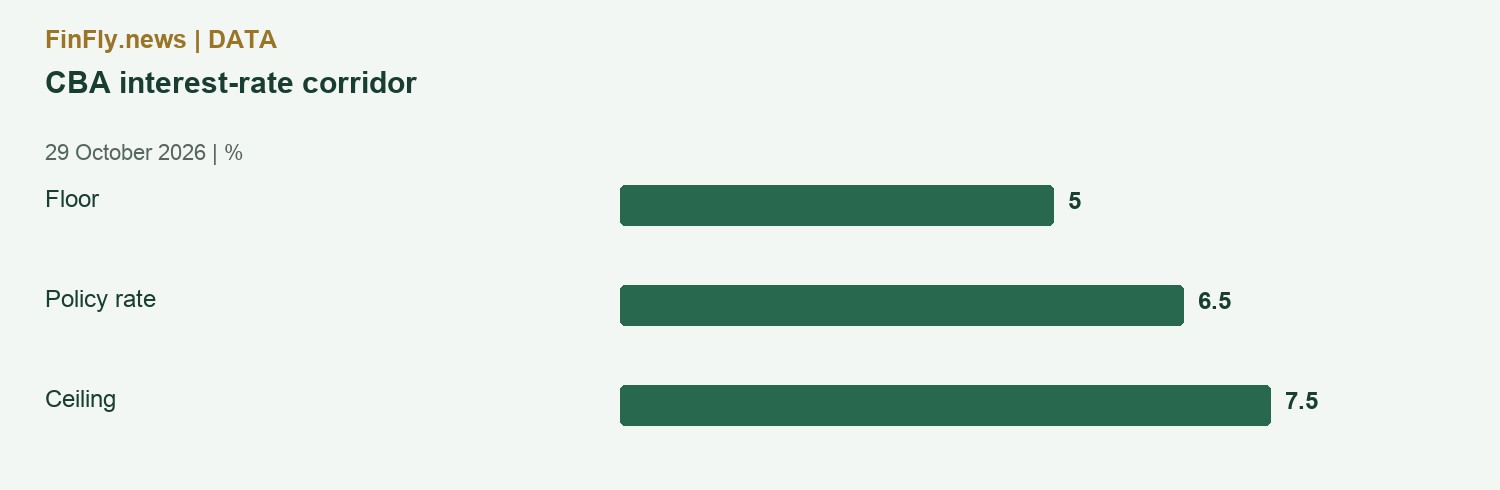
In its 29 October decision, the CBA kept the policy rate at 6.5%, the corridor floor at 5% and its ceiling at 7.5%. Inflation, expectations, foreign exchange and bank liquidity informed the decision. The next announcement is scheduled for 23 December.
The decision reflects persistent inflation pressure. September inflation was 5.5%, while the year-end forecast is 5.9%. Both sit within the 2-6% target range, but the forecast is close to its upper limit. This limits the scope for monetary easing.
Bank product pricing
The policy rate is not the tariff on a consumer or business loan. Funding costs, default risk, maturity, collateral and operating expenses all enter a bank’s pricing. Individual lending rates can therefore change while the policy rate remains at 6.5%.
Deposit pricing also depends on banks’ funding requirements. A bank seeking funds can offer a higher return without a CBA rate increase. A bank with ample cash has less reason to compete aggressively for savers. Maturity, early-withdrawal terms and the actual cash return matter alongside the advertised rate.
| Reference | Value | Meaning |
|---|---|---|
| Policy rate | 6.5% | Monetary policy signal |
| Corridor | 5-7.5% | CBA instrument rate boundaries |
| Next decision | 23 December | Date announced by the regulator |
Interest-rate outlook
For businesses, financing conditions are determined by the total cost of borrowing, including interest, fees, collateral requirements and repayment schedules. Changes in individual tariffs need to be assessed against the complete terms of the agreement.
The pause allows banks to reassess prices and funding conditions. The next inflation readings will show whether price growth moves towards the middle of the target range or stays near its ceiling. These indicators, together with external risks, will shape the scope for subsequent policy adjustments.
The first month after the September decision
At his 29 October press conference, CBA Governor Taleh Kazimov reported increased interbank activity following the 23 September decision. However, he said one month was insufficient to assess its full effects. The regulator does not currently plan additional measures to stimulate trading.
The CBA will continue managing liquidity through existing instruments, with AZIR and its position within the interest-rate corridor as operational references. Assessing transmission to the economy requires examining new lending and deposit terms alongside interbank activity. Early money-market results do not yet establish the full impact on borrowers.