
AZN 222.9 million of bids for an actual placement of AZN 53 million is a strong demand figure for one government-bond issue. At the 20 October auction, bids were 4.2 times the amount placed. The weighted average annual yield was 7.2420%. But strong demand is not a promise that every investor will earn 7.24%.
The Finance Ministry’s announcement identifies the bonds as AZ0201240089, maturing on 20 October 2029. The weighted average price was 99.3577 and the cut-off price 99.3366, with a cut-off yield of 7.2500%. These are auction results, not an offer to every investor at the same price.
What was four times larger?
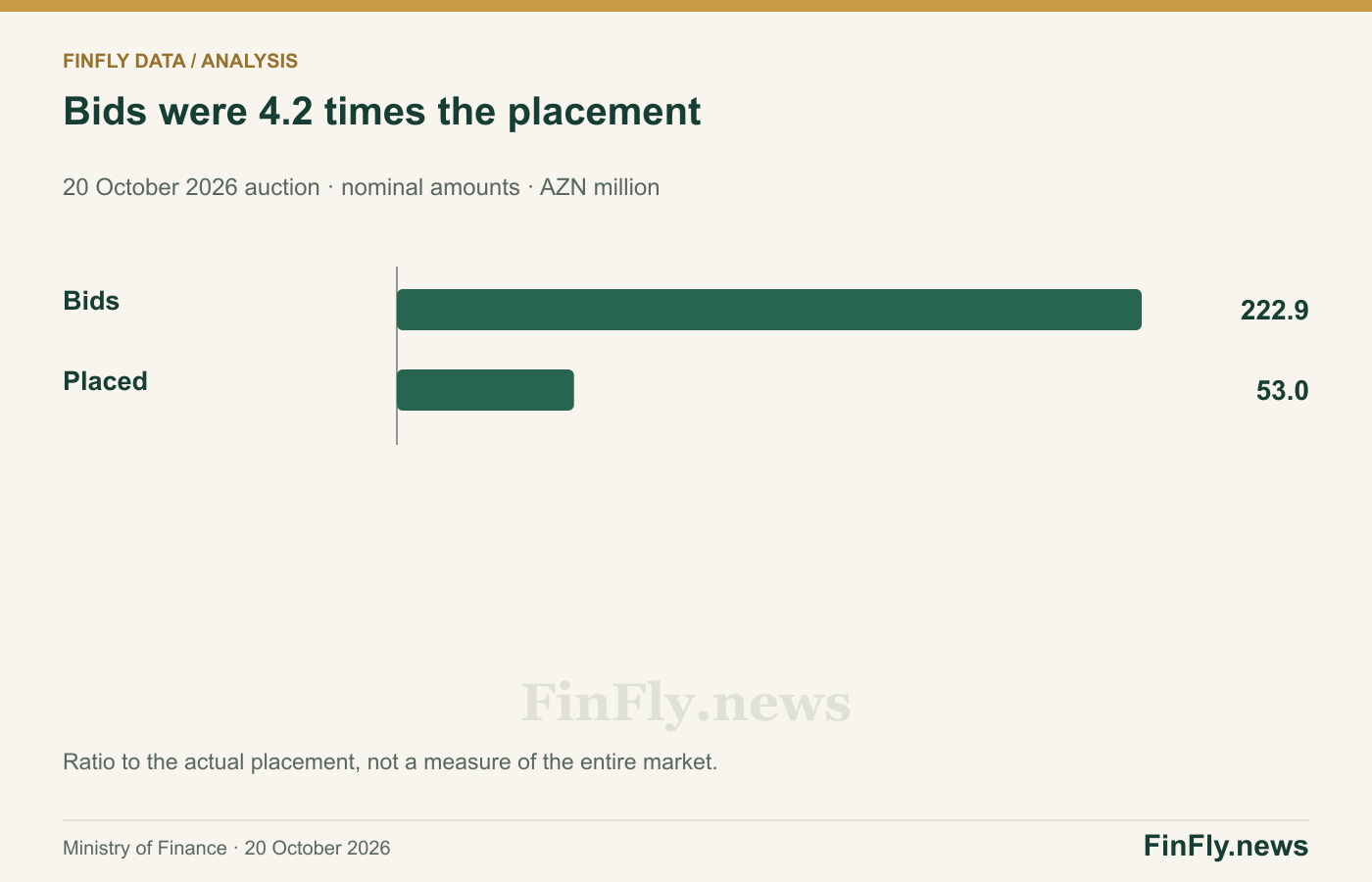
We divide the nominal value of bids by the nominal value placed: 222.9 / 53 = 4.21. That compares expressed demand with the amount accepted. It does not reveal how many independent bidders participated, who they were or how much they would invest in other securities.
It therefore does not establish excess liquidity throughout the market, or show that banks substituted bonds for business lending. The first claim would require liquidity indicators; the second would require buyer identities and changes in their asset portfolios. A single auction cannot answer either question.
Yield is not the coupon rate
A coupon is the contractual payment rate on the bond’s face value. Yield also reflects the purchase price, remaining term and cash flows. Buying below face value contributes to the return at redemption, but the discount cannot simply be added to the annual coupon: payment dates and time to maturity matter.
For illustration, a quote of 99.3577 means approximately 99.36 per 100 units of face value. The difference to 100 is not received immediately and is not a separate annual interest payment. Actual settlement may also involve accrued coupon interest and fees, which must be checked in the purchase terms.
Selling before maturity makes the realised result depend on the market price at that time. When required yields rise, prices of existing fixed-payment bonds generally fall, and vice versa. The period for which an investor can genuinely commit funds is therefore as important as the headline yield.
A fair comparison with a deposit
Start with the same currency and a comparable term. Then consider fees, applicable taxes, early-exit conditions, protections and the payment schedule. An auction yield before individual costs cannot be compared directly with an advertised deposit rate without examining both products.
The useful signal is substantial demand for this maturity on these terms. To test its durability, we would compare successive auctions: bids, amounts accepted, yields and subsequent trading. One strong result is an observation, not a complete investment recommendation.