The regulator describes requirements for SME, agricultural and exporter finance as relatively accommodating. Available funds are only one condition for lending.
Available funds and bank requirements
Azerbaijani banks have AZN 4.6 billion in free funds that can be used for lending within existing requirements, CBA Governor Taleh Kazimov said at his 29 October press conference. He put the overall liquidity surplus at AZN 6.2 billion.
The figures describe different measures. The surplus characterises the banking system’s position, while AZN 4.6 billion represents the lending capacity cited by the regulator after requirements are taken into account. It is not an allocated business-support programme or a volume of approved applications.
Asked about financing the real economy, Kazimov described requirements for SMEs, agriculture and export-oriented firms as relatively accommodating. He invited market participants to identify specific provisions if they believed those rules prevented lending.
| Measure cited by the governor | Amount | Interpretation |
|---|---|---|
| Liquidity surplus | AZN 6.2bn | System-level measure |
| Funds available for lending | AZN 4.6bn | Capacity after requirements |
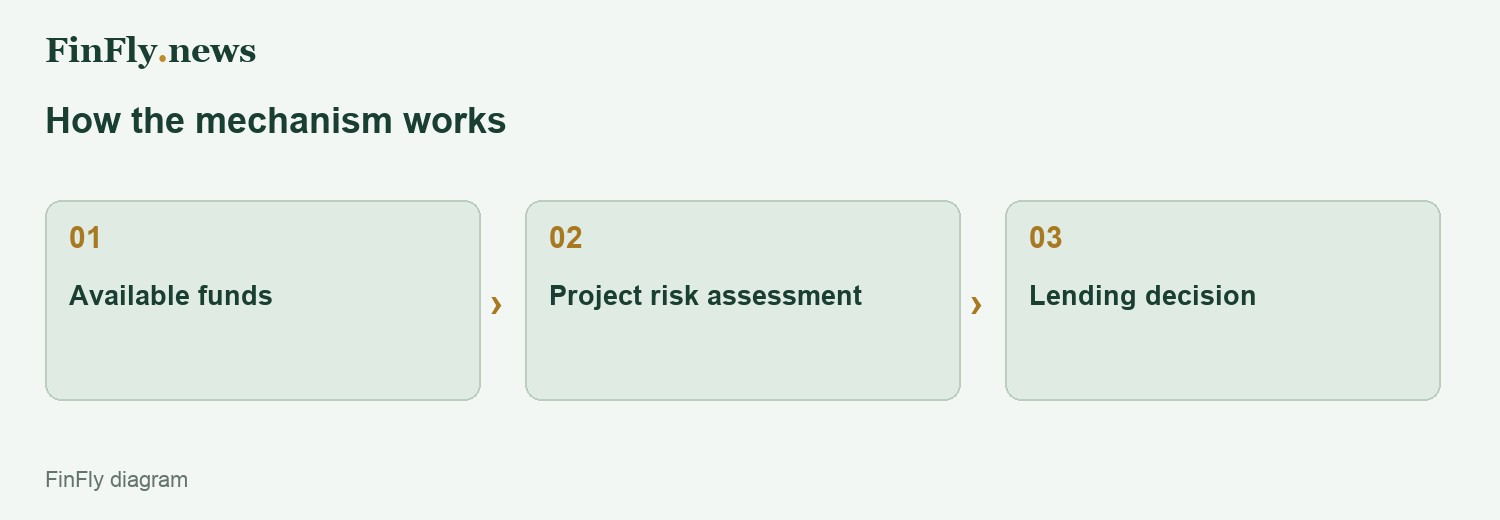
Why liquidity does not replace project assessment
Financing decisions depend on future cash flow, existing debt, collateral and project maturity. A bank can have free funds while considering a particular application high-risk. This is where system-wide liquidity and access to finance for an individual company diverge.
Businesses benefit from transparent accounts and a demonstrable repayment source. Banks need to assess revenues and costs, the resilience of a borrower’s customers and the match between loan maturity and funding. These considerations also affect pricing.
The CBA’s position shifts the discussion from a general resource shortage towards specific reasons for rejection and financing terms. Improvement can be measured through new real-economy lending, maturities, cost and the range of borrowers, rather than the liquidity figure alone.