
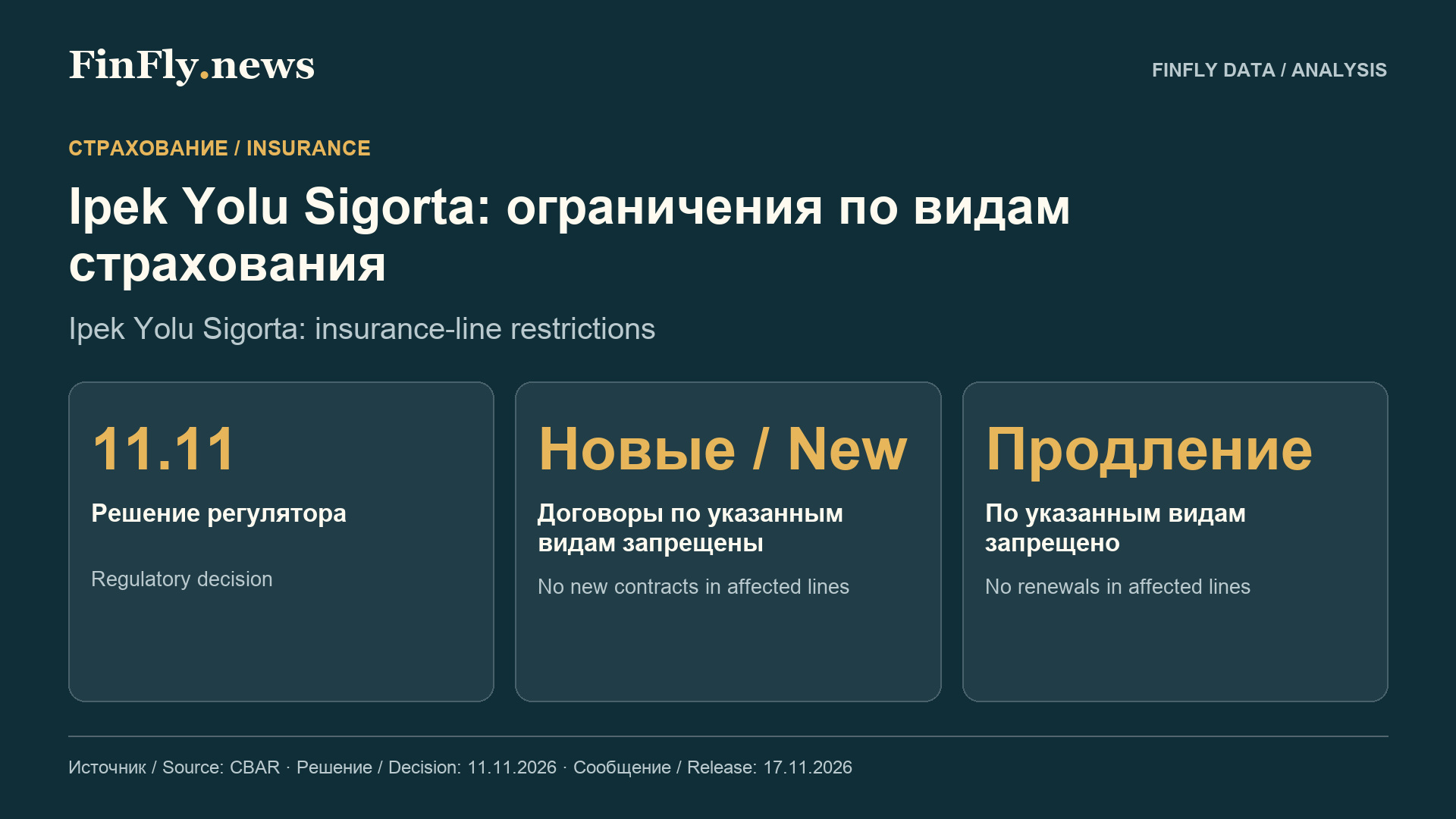
Ipek Yolu Sigorta can no longer issue new policies or renew existing contracts across a number of insurance lines. The restriction follows the insurer's own application, rather than a publicly announced regulatory penalty for misconduct.
The Central Bank of Azerbaijan's November 17 statement says the decision was taken on November 11, 2026. The company cited its business activities and strategic objectives. Affected lines include property, cargo and voluntary health insurance, alongside several aviation risks.
The practical issue is the next renewal
Policyholders need to establish whether cover for their next insurance period remains available. Where a contract falls within an affected line, a routine renewal with the existing insurer cannot be assumed. This matters particularly to businesses whose insurance arrangements form part of lending, supply or lease agreements.
Replacement cover should not be assessed on price alone. The sum insured, exclusions, deductible and start of liability determine whether a new policy genuinely replaces the old one. A gap between the expiry of one contract and the start of another can leave an exposure uninsured.
A licence restriction is not cancellation of every policy
The central bank describes a prohibition on new contracts and renewals in the specified lines. Its statement does not establish that all previously issued policies have been cancelled or that the company is insolvent. Assessing an individual existing policy requires its terms and written clarification from the insurer.
For a corporate customer, a practical starting point is to list policies, match their insurance classes against the central bank's decision and check expiry dates in advance. Where insurance is a contractual requirement, changes in cover should also be agreed with the relevant counterparty, such as the lender.
What the announcement does not establish
The decision alone does not assess the insurer's financial position, quantify the portfolio potentially moving elsewhere or predict competitors' pricing. The immediate issue is therefore the availability of particular products from one provider. Drawing conclusions about the wider insurance market would require premium and market-share data for the affected lines.