CBA average rates show an almost twofold gap between manat credit cards and car loans. Interest rates alone do not capture the full cost of a contract.
Five products, five prices
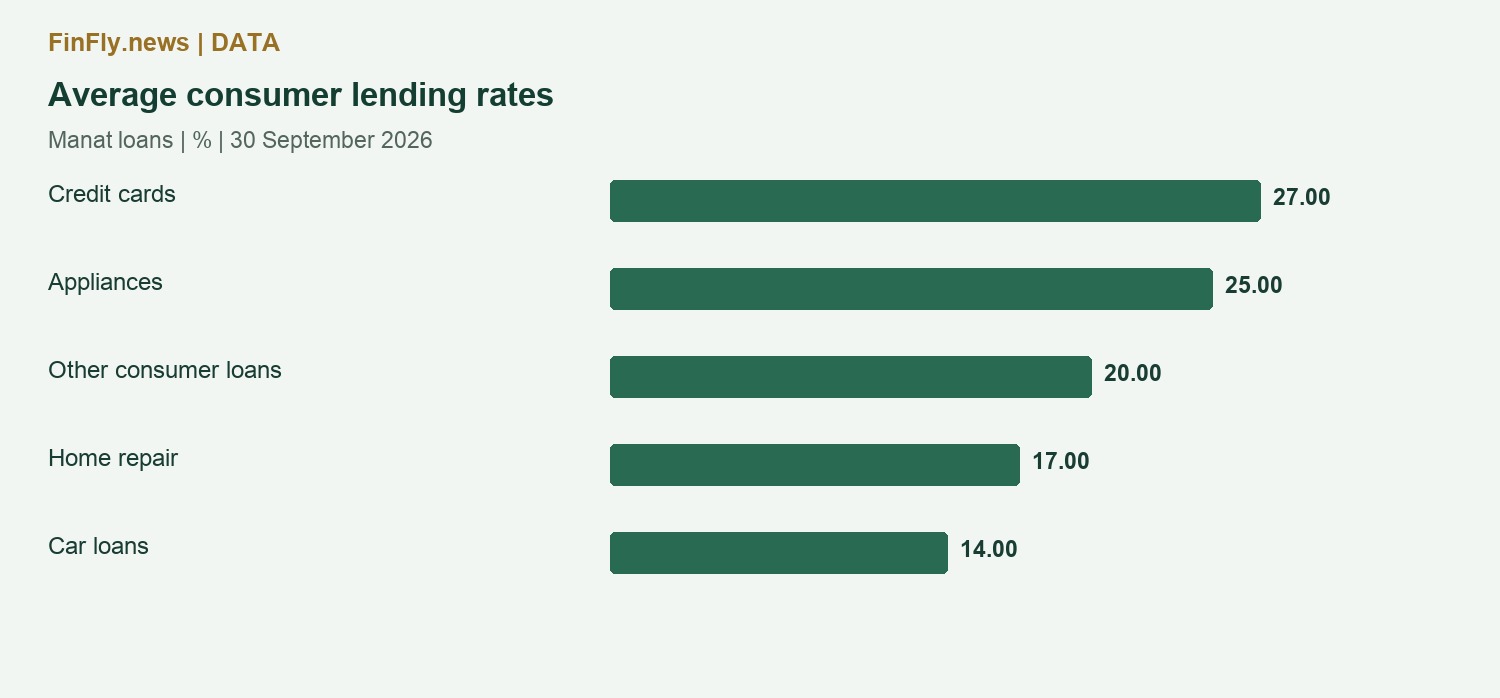
The CBA table dated 30 September 2026 puts the average credit-card rate at 27%, appliance loans at 25%, home-repair loans at 17% and car loans at 14%. Other consumer credit averages 20%.
The gap between cards and car loans is 13 percentage points. That does not mean the same borrower can obtain either product on otherwise identical terms: their purpose, maturity and security differ.
An average is not a personal offer
The table covers national-currency lending and excludes loans to acquire or build housing. Dashes for foreign-currency products do not indicate zero interest.
These are category averages, not a ranking of banks or personalized tariffs. Fees, insurance, account charges and grace-period rules can change actual costs. An average rate alone cannot establish the total financing charge without a term and repayment schedule.
| Product | Average rate |
|---|---|
| Credit cards | 27% |
| Appliances | 25% |
| Other consumer | 20% |
| Home repair | 17% |
| Car loans | 14% |
The borrower’s comparison
Cards offer flexible use but have the highest published average rate. Car loans serve a narrower purpose. Treating them as interchangeable sources of funding would overlook those differences.
The useful comparison is the total amount payable under a particular contract. Where a grace period is offered, its eligible transactions and expiry conditions matter. The CBA figures indicate the market’s broad price structure; the loan agreement determines the final bill.