The non-oil-and-gas economy is projected to accelerate to 4.3%. Next year’s oil-price assumption is $10 a barrel lower.
The regulator’s two-year outlook
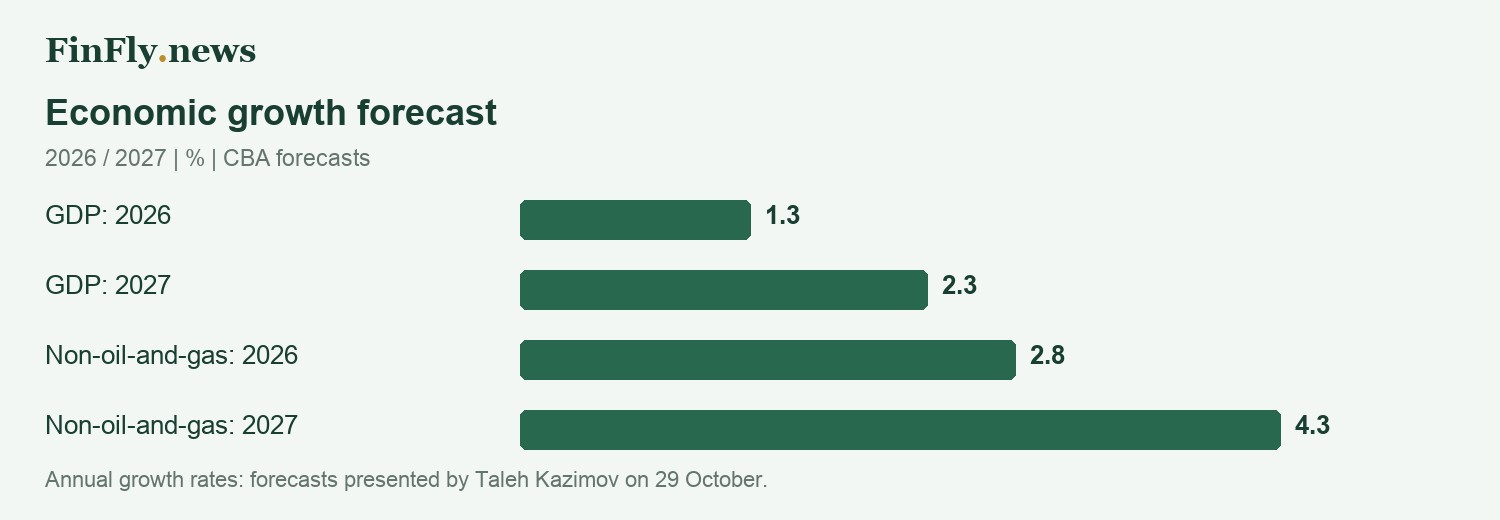
The Central Bank of Azerbaijan expects GDP growth of 1.3% in 2026 and 2.3% in 2027, Taleh Kazimov said at his 29 October press conference. For the non-oil-and-gas sector, the corresponding forecasts are 2.8% and 4.3%.
That implies an acceleration of 1 percentage point in overall growth and 1.5 points in non-oil-and-gas growth. These are comparisons between projected annual rates, not realised outcomes. The governor identified tourism, trade, communications and transport as major contributors to non-oil activity.
Kazimov also cited expected average prices for Azerbaijani oil of $92.8 a barrel in 2026 and $82.8 in 2027. The difference is $10, or approximately 10.8% of this year’s projection.
| Measure | 2026 forecast | 2027 forecast |
|---|---|---|
| GDP growth | 1.3% | 2.3% |
| Non-oil-and-gas GDP growth | 2.8% | 4.3% |
| Average Azerbaijani oil price | $92.8/barrel | $82.8/barrel |
Output growth and export receipts
A lower oil price can coexist with faster real GDP growth. Price affects the value of export receipts, while real growth measures changes in output excluding price effects. Non-oil sectors can expand even when commodity revenues follow a different path.
Other things equal, a lower oil price reduces foreign-currency receipts for a comparable export volume. The external balance also depends on production, gas exports, imports and services. The price change cannot therefore be translated directly into an identical percentage decline in budget revenue.
For businesses, the outlook highlights the importance of domestic demand and service industries. Delivery should be assessed through actual activity, investment and employment. Faster non-oil growth becomes a durable source of support when expanding production and services continues to generate economic returns.