Xalq Sığorta has the highest reading in the Central Bank’s compulsory motor insurance complaint index, at 1.52. Meqa Sığorta follows at 1.21 and PAŞA Sığorta at 1.11. The observation window covers 12 months, from 1 October 2025 to 30 September 2026.
This is not a list of insurers receiving the largest absolute number of complaints. The index compares an insurer’s share of complaints with its share of MTPL contracts, allowing for differences in customer-base size.
What a reading above one means
A reading of 1.52 means that the insurer’s share of included complaints is 1.52 times its contract share. A value below one indicates the opposite relationship. It does not mean there were no complaints, while a value above one does not establish wrongdoing in every case.
Six insurers appear in the published table. Atəşgah records 0.80, Azərbaycan Sənaye Sığorta 0.75 and Qala Sığorta 0.72. The comparison concerns MTPL specifically, not every product sold by these companies.
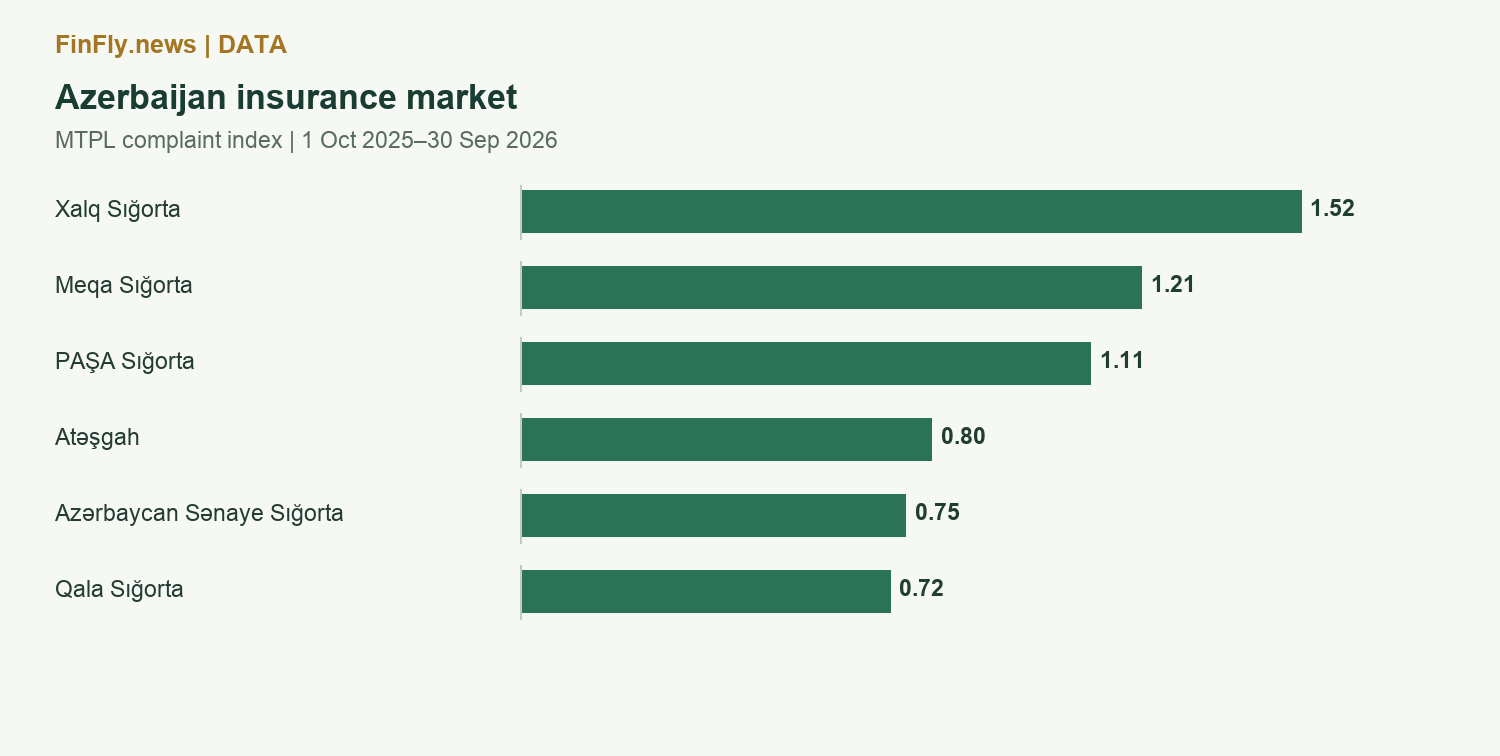
| Insurer | Index |
|---|---|
| Xalq Sığorta | 1.52 |
| Meqa Sığorta | 1.21 |
| PAŞA Sığorta | 1.11 |
| Atəşgah | 0.80 |
| Azərbaycan Sənaye Sığorta | 0.75 |
| Qala Sığorta | 0.72 |
Customer experience needs its own measures
For policyholders, the index signals complaint frequency relative to business size. It does not replace policy terms or reveal repair times, average payouts or the proportion of complaints resolved in the customer’s favour.
A position in the list is not a solvency assessment either. A financially large insurer can attract more complaints relative to its size, while a smaller provider can have a favourable reading with a more limited product offering.
Using the figures carefully
When comparing insurers, customers can consider the index alongside claims procedures, access to settlement services and the clarity of explanations in individual cases. Assessing a trend requires successive publications using the same methodology.
This table presents a single rolling annual window. It does not establish whether service improved or deteriorated specifically in September: the calculation also includes events from the preceding eleven months.