ADY is piloting a new platform for freight and commercial operations, the company's freight department head told local media in a November 24 interview. During the transition after the pilot, it is expected to operate alongside ADY Smart for a period. Shippers can prepare their own data and workflows, while recognising that implementation is not yet complete.
Measure each stage
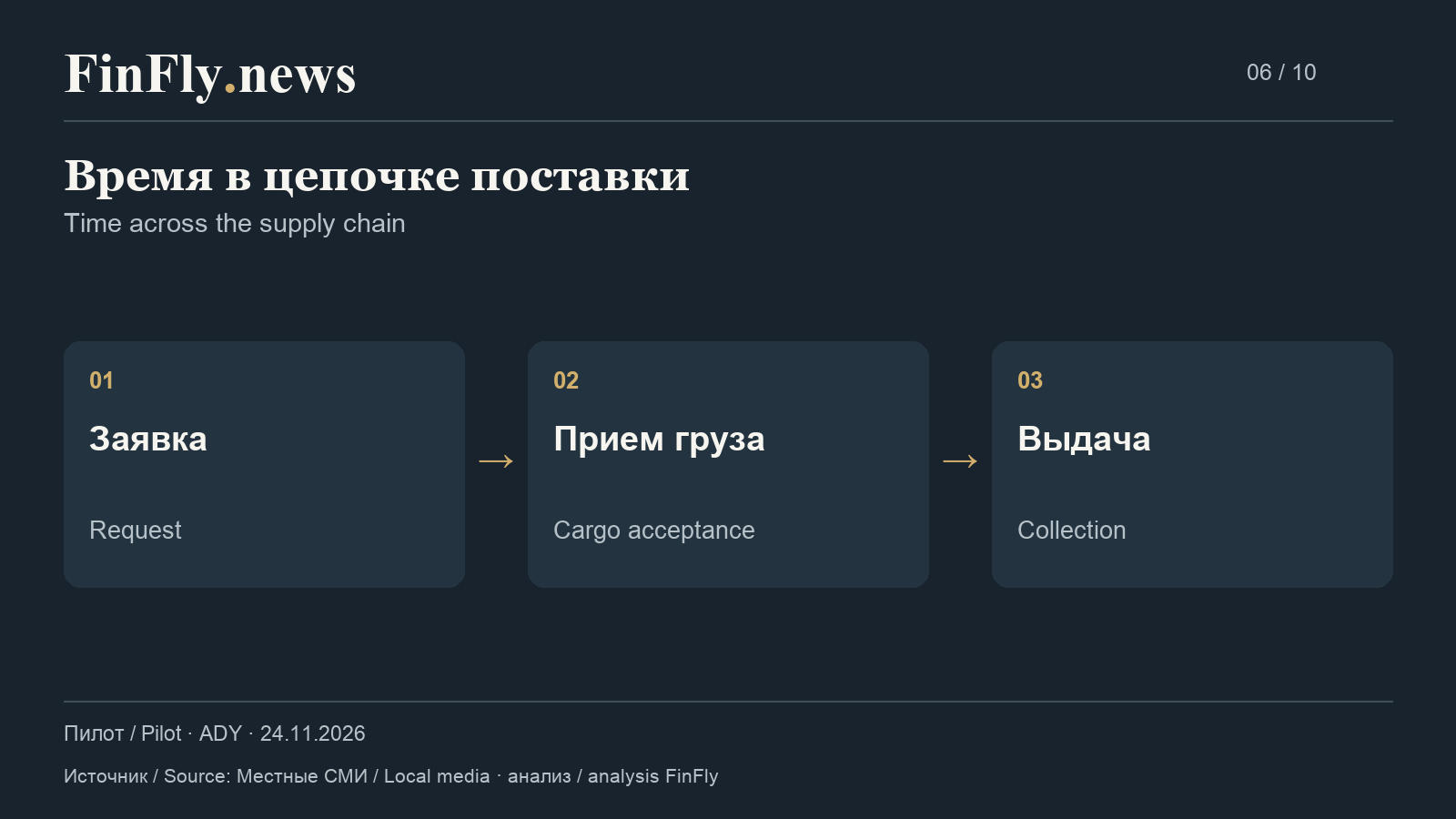
FinFly's assessment is that useful metrics begin before departure: request to confirmation, documentation to cargo acceptance, and arrival to collection. End-to-end transit time alone can hide administrative improvements or wrongly attribute changes elsewhere on the route to the platform.
Record comparable journeys before migration and compare them with later operations. Keep route, cargo and acceptance conditions similar. Also track document corrections, manual approvals and support requests.
Translate time into capital costs
In an illustrative FinFly scenario, shortening the period during which AZN 100,000 is tied up in goods by two days, at an assumed annual capital cost of 18%, saves about AZN 99: 100,000 × 18% × 2 / 365. This is not a measured ADY benefit or a quoted lending rate.
Avoided storage, detention or buffer inventory may add value, but each item needs contractual and operational evidence. Two days saved in an administrative workflow do not necessarily mean customer cash arrives two days earlier.
Reconcile parallel systems
Assign one owner for shipment status, use a shared shipment identifier and preserve confirmations during migration. Otherwise, one movement may develop conflicting document versions. Confirm integration options with the railway rather than assuming an interface is available.
Changes to inventory buffers or delivery commitments should follow consistent results across several cycles. The pilot establishes the direction of change; the shipper's own measurements must establish the financial benefit.