
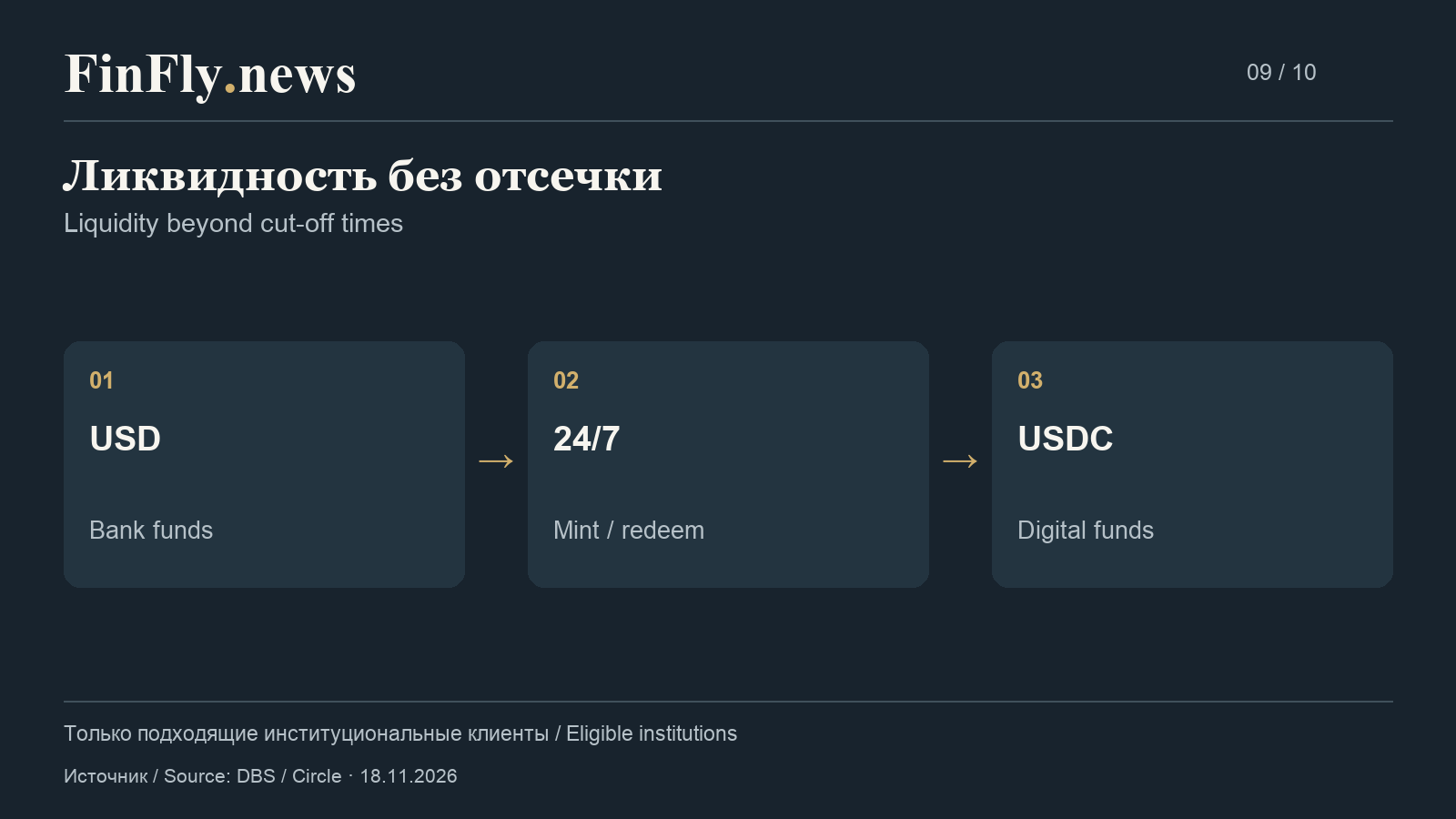
DBS and Circle announced direct USDC minting and redemption for eligible institutional clients. The November 18 announcement provides for 24/7 USD-USDC settlement through DBS, potentially reducing reliance on secondary-market token purchases. Company eligibility and onboarding terms still need to be confirmed.
Focus on prefunding
FinFly's assessment is that the treasury value lies in the amount of money prepared in advance. Distributing funds across platforms before a weekend can leave liquidity temporarily unavailable elsewhere. More flexible funding could change that schedule.
The benefit depends on all required parties supporting the necessary route and operating hours. One institution's round-the-clock USD-USDC conversion does not mean every final supplier immediately receives usable money in its banking system.
Calculate a specific saving
In a FinFly illustration, a business can reduce a USD 500,000 reserve by three days, using an assumed annual capital cost of 8%. The saving for that period is approximately USD 329: 500,000 × 8% × 3 / 365. This is not a DBS tariff, USDC yield or measured partnership outcome.
Deduct additional fees, custody, integration and control costs. If the company retains its existing buffer for resilience, the modelled saving does not materialise. Nor should it multiply the figure across every week without evidence that the same funding need recurs.
Set treasury controls
Check permitted assets under internal policy, redemption terms, staff permissions, limits and reconciliation. Compare the route with ordinary bank processes using the same final amount and availability deadline. Consider counterparty risk and temporary infrastructure unavailability.
The partnership develops the connection between banking and digital assets. For an individual company, adoption should rest on measured working-capital savings after all costs, rather than the 24/7 label alone.