

The Middle Corridor partners’ plan targets 30 million tonnes by 2029, Georgian Economy Minister Mariam Kvrivishvili said in an Imedi interview reported on November 16. For cargo owners, the practical question behind that target is how much capital remains tied up while goods travel.
Goods in transit require financing
Assume a shipment worth USD 1 million and an annual financing cost of 12%. Each additional transit day costs roughly USD 329: multiply the shipment value by 12% and divide by 365. Ten days add about USD 3,288, excluding storage, insurance and possible penalties.
Reliability carries its own value
Uncertain delivery times may require an importer to hold safety stock. A route with a dependable timetable can therefore be commercially attractive even when an alternative offers a shorter average journey. The advantage depends on cargo value, shipment frequency and the cost of interrupted production or sales.
How to measure progress
Alongside tonnage, useful measures include terminal dwell time, the dispersion of delivery times and the proportion of shipments arriving on schedule. Expanding one section provides limited benefit if a queue simply moves to the next terminal.
The volume target defines scale; total delivery cost and reliability define customer value. The model below illustrates sensitivity to delays and does not estimate actual corridor tariffs.
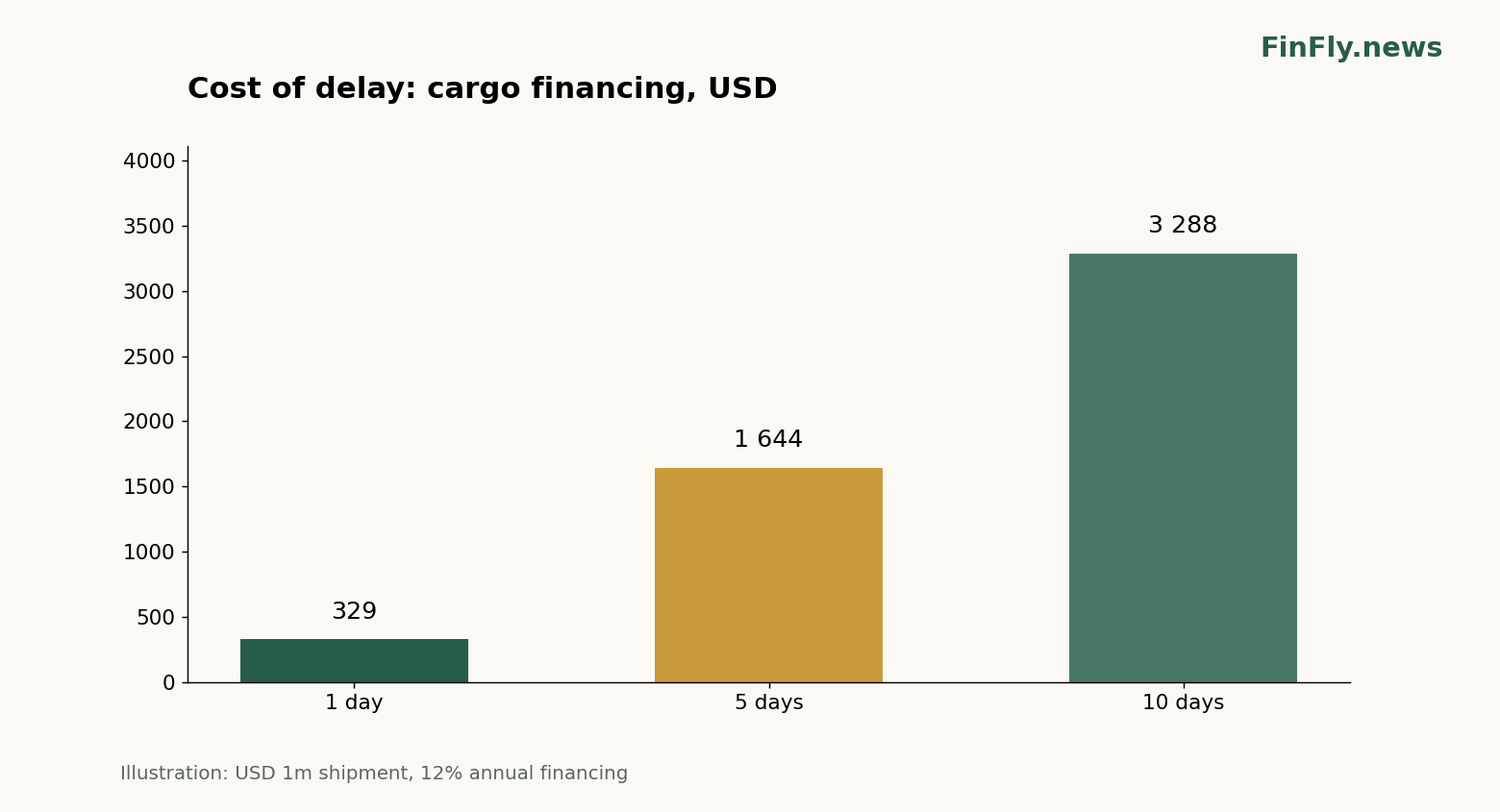
| Delay, days | Cost, USD |
|---|---|
| 1 | 329 |
| 5 | 1,644 |
| 10 | 3,288 |