The total score in the StartupBlink Global Startup Ecosystem Index 2026 combines ecosystem quantity, outcome quality and the business environment. It is therefore neither a funding total nor a simple startup count. Different components contribute to the overall assessment.
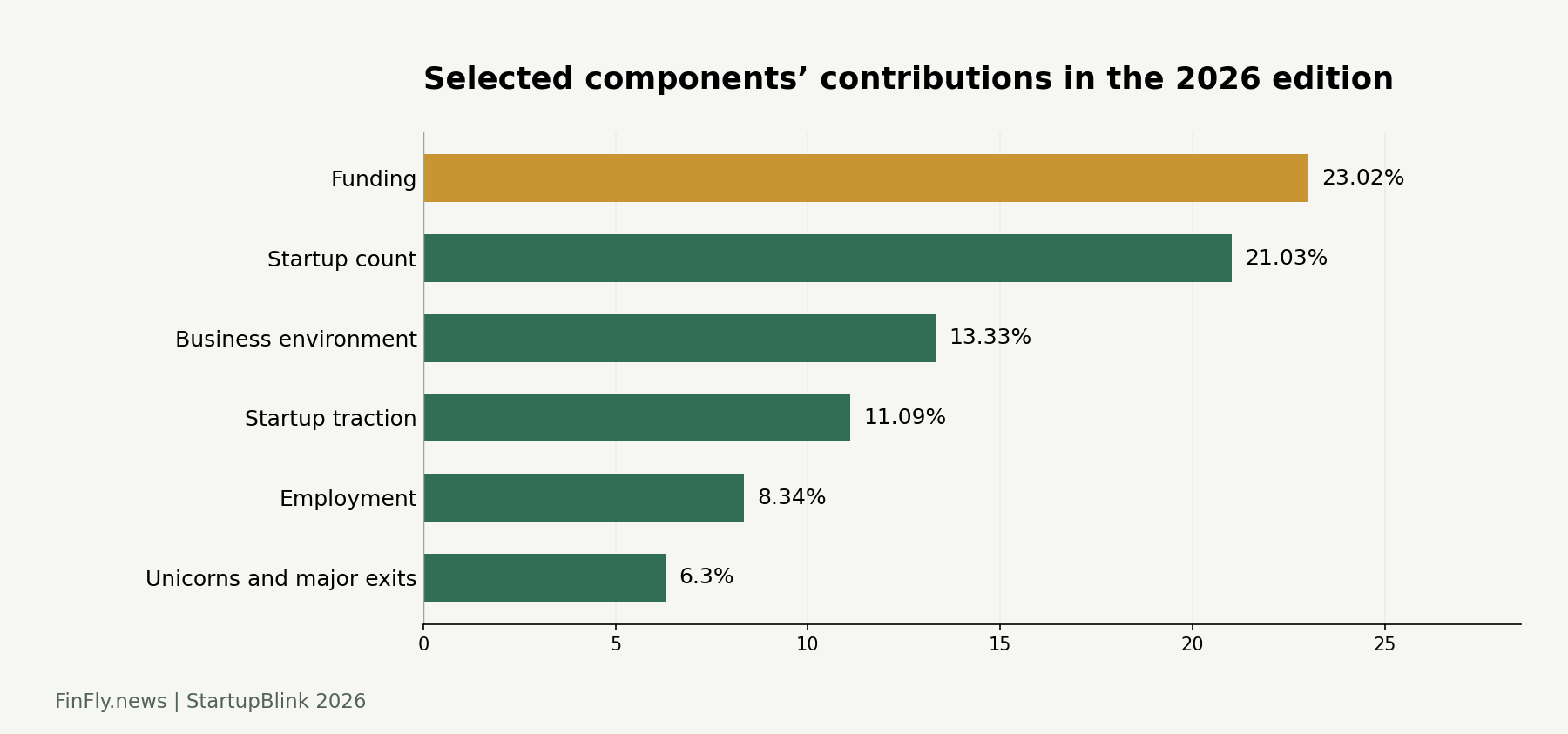
The methodology reports how individual parameters contributed to the aggregate score across all ranked cities in the 2026 edition. These are observed shares in the current dataset, not permanent formula weights for every city. The table presents six large components rather than the complete index.
| Component | Share of aggregate city score, % |
|---|---|
| Funding | 23.02 |
| Startup count | 21.03 |
| Business environment | 13.33 |
| Startup traction | 11.09 |
| Employment | 8.34 |
| Unicorns and major exits | 6.3 |
Interpreting the percentages
Time-adjusted funding accounts for 23.02% of the aggregate city score and startup count for 21.03%. Startup traction, including digital audience and customer-base indicators, contributes 11.09%, while employment contributes 8.34%.
Those shares cannot be used to promise that a particular increase in one city’s indicator will produce a fixed ranking improvement. Contributions change with the data, and positions also depend on competitors.
Older outcomes gradually lose influence
The report describes a fading mechanism for past investments, exits and new unicorns. Events from the latest 12 months receive full credit, with their influence gradually declining over ten years.
This requires fresh outcomes to sustain a strong score. Historical success does not secure a permanent position, while explaining an individual city’s movement still requires component-level evidence.
Countries and cities use different bases
Country scores are adjusted for population; city scores are not. They should not be presented as interchangeable measures. Ecosystem growth means a percentage change in the score between editions rather than growth in revenue or investment.
Business research benefits from reading rank, score and score change together, then examining the evidence relevant to the decision: transactions, customers, employment or industry outcomes.