An AI assistant can take an enquiry at night, answer a routine question and suggest a meeting. But turning a working demonstration into a tool a business can trust with customers raises questions about reliability, cost and oversight.
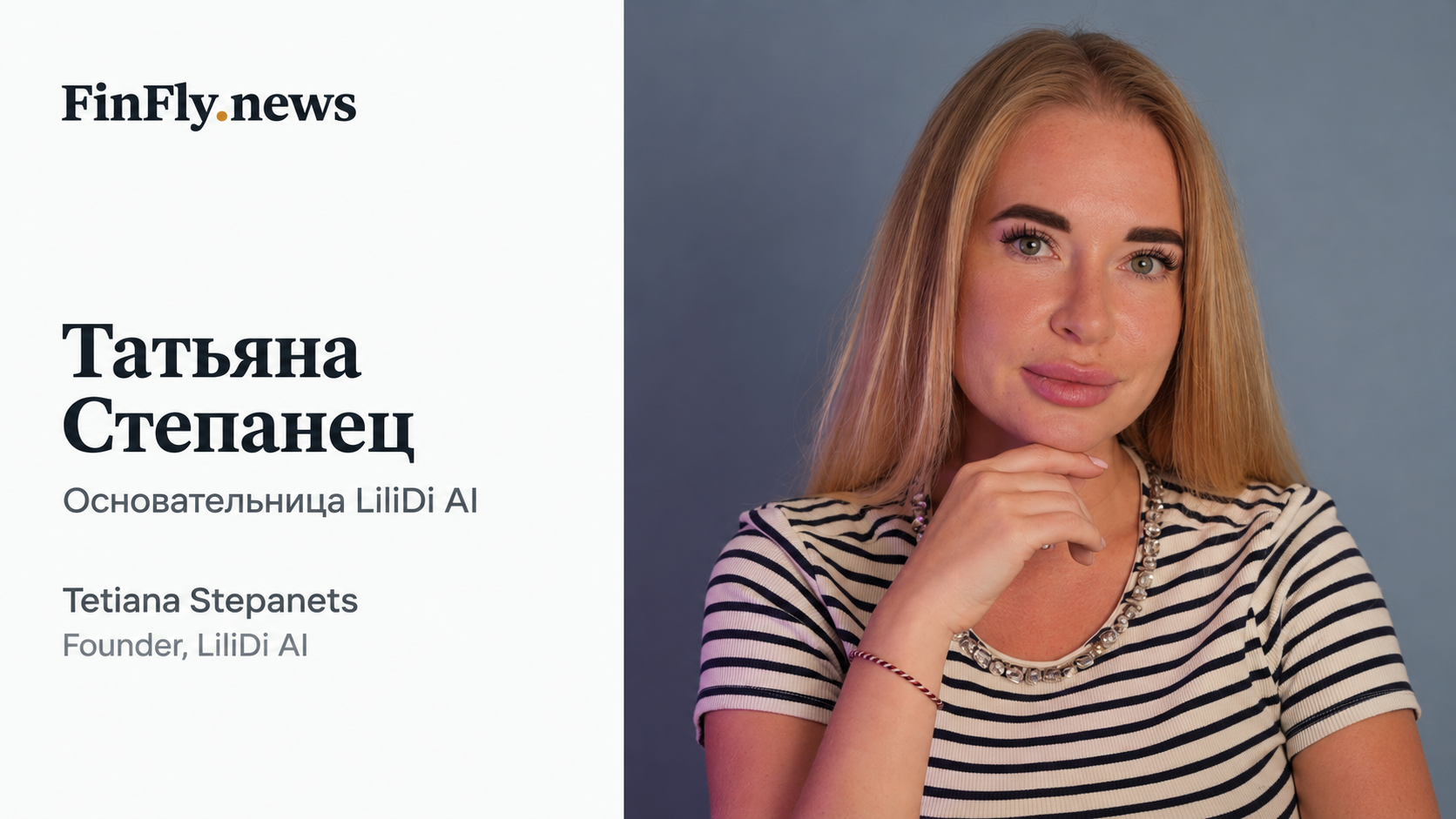
In an exclusive written interview with FinFly.News, Tetiana Stepanets, founder of LiliDi AI, discusses the development of Lilidi Twin, her personal investment and the results of its early pilots. According to the figures she provided for this interview, the project has 10 pilots and about 140 users but no paid subscriptions yet. Its effect on sales and staff workloads remains to be measured.
The product and early results
What business task does Lilidi Twin handle best today? Can you give an example?
Twin is best at handling the first line of contact: initial conversations with website visitors when a team cannot answer everyone immediately. Small businesses miss enquiries in the evening, at weekends and simply because everyone is busy.
Here is an example from our current pilots. A visitor to SeaOcean’s website asks about its free SEO audit: what it checks and which plan would be suitable. Twin responds through video, voice or text, strictly using materials approved by SeaOcean itself. It helps the visitor choose a plan and suggests a next step, such as booking a conversation. The company gets an enquiry handled at any time of day, with its context preserved, rather than losing the visitor.
To be clear about the outcome: we have not yet measured how many additional bookings this has produced, and I will not give a number we do not have. For now, the result for the company is enquiries answered around the clock and leads saved with their context.
What stage has the business reached? How many accounts use the product regularly, and do you have paying customers?
We are an early-stage company with no outside investment. Our current figures are 10 pilots and about 140 users; we do not yet have paid subscriptions. The figures of 110 accounts and 11 companies that we shared previously were an earlier snapshot. Pilots start and finish, so the numbers change slightly from week to week.
There is an important qualification: I do not call pilots paying customers, and I do not attribute every conversation to a real buyer, because some dialogues are tests. Our goal for the next 12-18 months is to convert pilots into paying customers and make Twin dependable in everyday conversations.
Which results can you already substantiate with numbers?
For now, I can substantiate only the technical side: how many call attempts actually connect, which I explain in more detail below. We have not yet measured changes in bookings, response times or staff workloads at client businesses. The pilots are recent, and sound measurement requires a baseline from before deployment.
Our plan for assessing the benefits is to add server-side logging of the reason for each failure, separately for each website, so that we can fix causes rather than guess. Next comes a before-and-after comparison of meeting bookings made through Twin. Until we have that, I deliberately avoid quoting conversion or revenue figures, and I am cautious about those who quote them at this stage.
The cost of deployment
How should a business calculate the assistant’s full cost? At what volume of enquiries does it make sense?
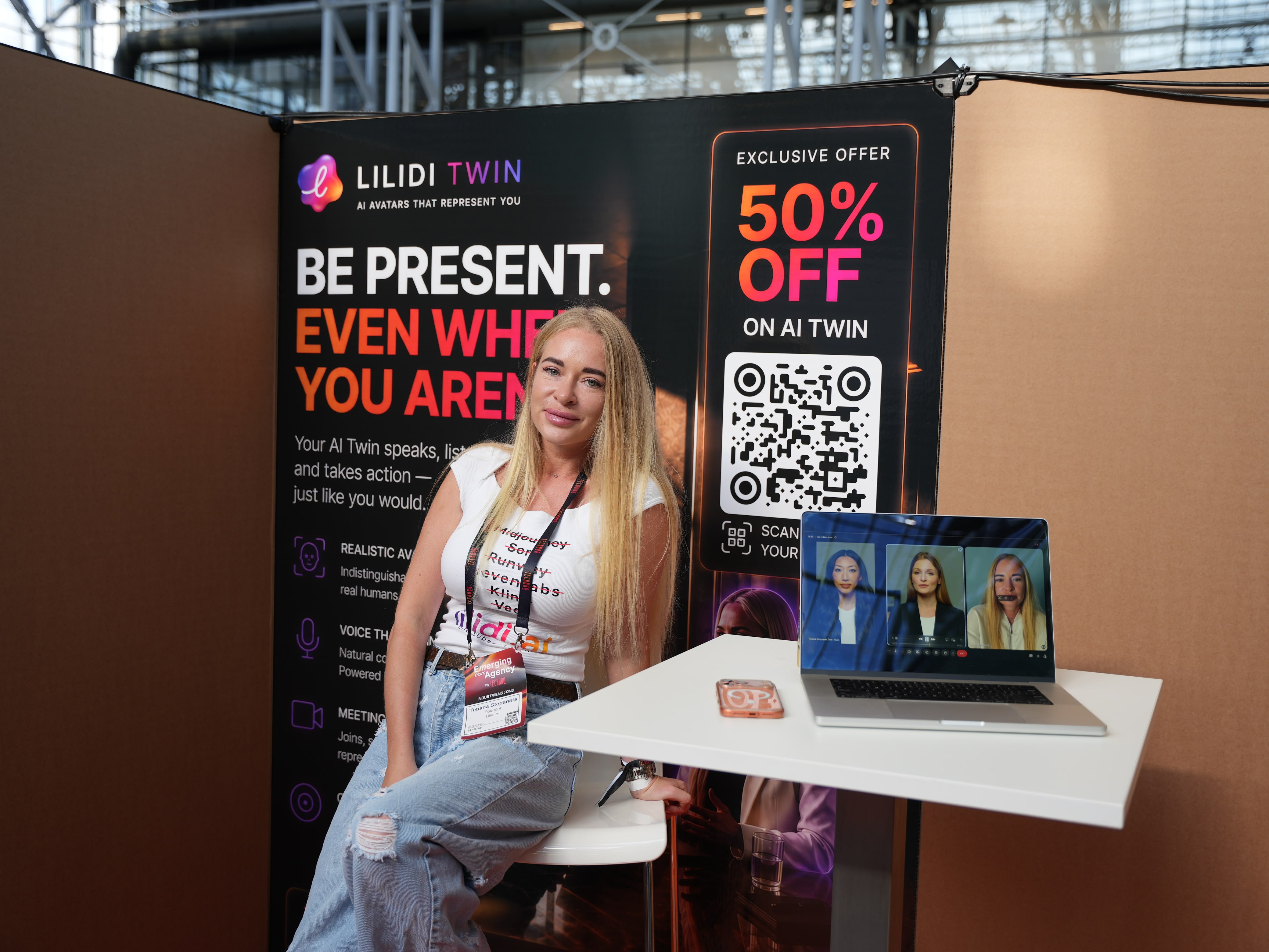
The subscription includes a free plan with 60 minutes of video or voice each month, no card required, and the first 14 days on the Professional tier. Paid plans cost $59 a month for 175 minutes, $179 for 500 and $499 for 1,500, with a 20% discount for annual billing.
There is also preparation time beyond the subscription. Creating a Twin itself takes about 30 seconds. The business then populates the knowledge base it can use, sets behavioural rules and tests it on real questions. That part depends on how much material the company has. For reviewing conversations, Twin sends the owner a Telegram digest every morning with calls, new leads and emails awaiting approval, so oversight takes minutes rather than hours.
The economics start to make sense where a business regularly misses initial enquiries or answers the same questions repeatedly. If, for $59 a month, Twin saves even a few hours of the team’s time or a couple of leads that would otherwise be lost, it pays for itself. That is a framework for an estimate, not a measured case study.
Reliability and trust
What did the review of 99 call attempts show, and what has been fixed?
These are our own homepage figures over 28 days: 99 call attempts by 50 visitors produced 55 connected conversations involving 34 visitors. The other attempts ended in errors or the visitor leaving while the connection was being established. The sample does include our internal tests, so I present it as a transparent starting point, not a benchmark.
The review showed that failures are unevenly distributed, with noticeably more on Apple devices than on Windows and Android. We suspect differences in how browsers handle microphone and camera permissions, but the cause has not been conclusively established. I will not present a hypothesis as a fact.
What we have already done is ensure that visitors have a way forward after a failure: they can try again, open the page in a new tab or book a call with a person. We are also adding server-side records of the reason for each failure, separately for every website, to address the causes rather than guess. The list of specific resolved defects grows each week, and connection reliability remains our main technical priority.
What happens if the AI quotes an incorrect price or promises a service that does not exist?
Let me be clear: we have not yet had a documented case in the pilots where Twin quoted a customer the wrong price, so I will not invent a neat story. But an error is possible in principle. It is a language model and can make mistakes, just like ChatGPT. The accuracy of its answers depends directly on the knowledge base supplied by the business.
The main way to manage that risk is therefore to control the knowledge base. Twin answers only from materials the business has reviewed and approved. We deliberately ask questions outside that knowledge: the correct response is to say ‘I don’t know’ and offer a human contact. Under our rules, complaints, pricing exceptions and sensitive subjects are handed over to a person, with the conversation’s context preserved so that the customer does not have to start again. Twin drafts follow-up emails itself, but nothing is sent until a person clicks ‘send’. The owner can access the entire conversation history. If an error does occur, it is visible, the knowledge base can be corrected and a person responds to the customer.
Why would a customer need a video avatar? Have you compared video, voice and text?
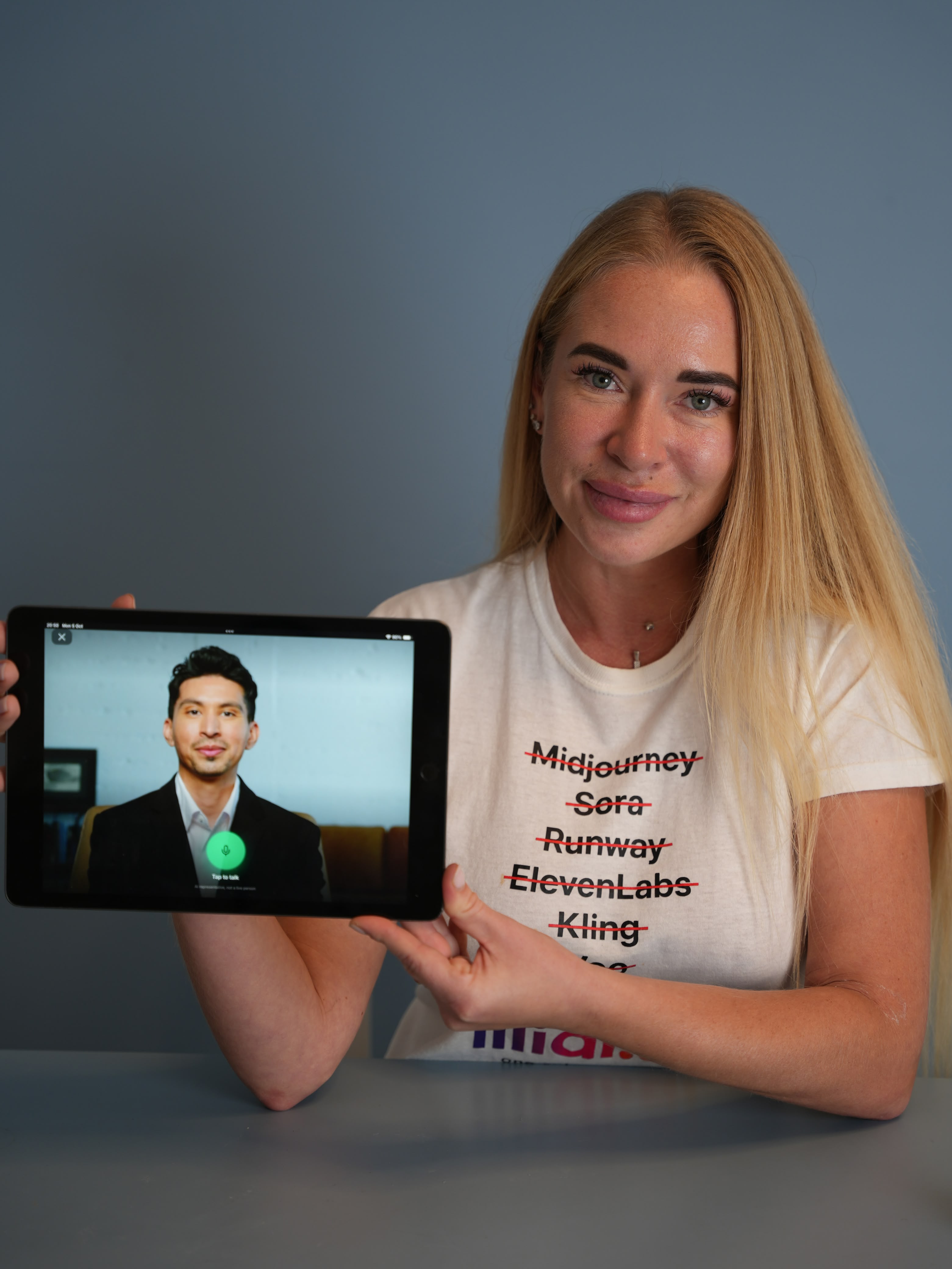
I am not claiming that video is always better. Sometimes it is quicker to type a question, sometimes speaking is more convenient, and sometimes seeing a representative helps, for example when explaining a product or using an iPad kiosk where a visitor starts a conversation with one tap. The value lies in offering a choice and making the conversation clear, not in the face itself. A realistic face will not fix an answer that is slow, wrong or unhelpful.
We do not yet have a direct, measured comparison of visitor behaviour across video, voice and text, and I will not invent one. We do know where a face creates distrust: when an avatar pretends to be human. That is why our Twin identifies itself as AI in its very first sentence, and our terms prohibit configuring it to pose as a person.

Data and technology
How is information from customer conversations protected?
Twin answers only from knowledge approved by the business. Conversation context is saved so that a customer can resume the dialogue and the owner can see the history. The data is stored on an independent server in Helsinki that outsiders cannot access; it is the owner’s private data. Deleting the history is straightforward: the owner can completely delete their Twin and its data from the dashboard, using a dedicated action. We store technical failure logs on our server, separated by website, to address the causes of problems.
We do not publicly name the third-party services involved in processing conversations. The video avatar and voice use external models.
Which parts of the technology are yours, and which external services does Twin depend on?
We own the product logic: the knowledge base with answer approval, lead qualification, meeting bookings in Google Calendar and Calendly, follow-up emails drafted for human approval, Telegram integration and the dashboard. We rely on external services in two areas: the avatar’s face and real-time voice. We do not publicly name the specific providers.
As for cost and availability, our model is based on conversation minutes, so changes in external service prices directly affect our cost per minute. We monitor that and account for the dependency in our pricing. It is a real risk for any product built on large models, and there is no point hiding it.
Building the company
How much did it cost to get from idea to product? Where did you save money, and what had to be rebuilt?
We operate without outside investment; everything has been built with the founder’s money. About $50,000 of my own funds has been invested so far. That is an estimate of the total; I do not publish a detailed breakdown by expense category.
I am a non-technical founder. I built the first version using AI coding tools and tested everything myself, then brought in engineers to make the product reliable and secure. The savings came early: building a prototype and testing demand did not require hiring a team. What needed rebuilding was what looks simple in a demo but breaks in real life: connection stability across devices, browser permissions and behaviour when something fails. Today the team consists of four people: two full-time and two part-time engineers.
New markets and a practical pilot
How ready is the product for Azerbaijan and neighbouring markets?
The website lists support for more than 30 languages, and that is true of the platform’s capabilities. We use Russian regularly: we speak it ourselves and test conversations in it. We do not yet have separately measured tests in Azerbaijani and Turkish, including accents and language switching within a single conversation, and I will not claim otherwise.
My practical proposal is that anyone can talk to the live Twin on our website free of charge right now. We would be happy to run such a test with the editorial team in Azerbaijani and Russian and openly show what works and what does not yet.
Which businesses should postpone adoption, and what would a sensible pilot look like?
It is worth postponing if there are only a few enquiries a week that can easily be handled personally; if almost every conversation requires human judgement, such as an individual price calculation or advice on a sensitive topic; if nobody has time to prepare the knowledge base and check answers; or if the expectation is to replace an employee entirely. Twin is a first point of contact with a defined job, not an automatic replacement for a team.
My short pilot plan would be to choose one specific job, such as answering frequently asked questions and booking a meeting. Upload approved knowledge and rules. Start on the free plan; 60 minutes a month is enough for a test. Over two to four weeks, the success criteria would be the share of conversations that connect, the share of answers drawn strictly from approved knowledge, the number of meetings booked and visitors’ reactions. The reasons to stop would be recurring incorrect answers after the knowledge has been corrected, low engagement or no bookings. If the pilot does not work, we should stop and examine why. These timescales are indicative: a recommendation, not a measured standard.
A business interested in such a pilot can contact us at info@lilidi.ai or talk directly to the live Twin on lilidi.ai. Creating a Twin takes about 30 seconds, and the free 60 minutes a month is enough to test the product on its own real enquiries.