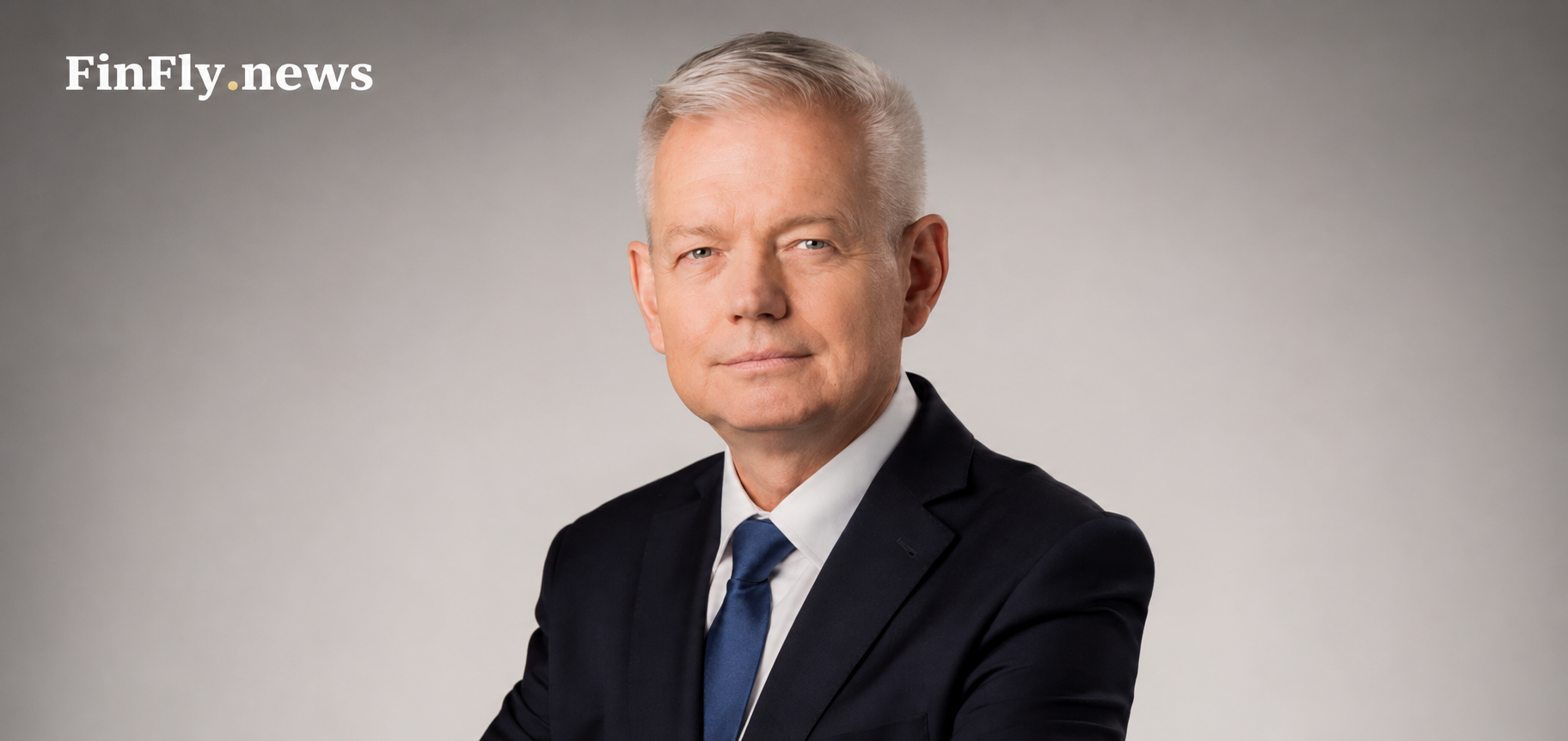
Poland’s embassy in Baku issued over 37% more tourist visas in January-October 2026 than in the whole of 2025, Ambassador of Poland to Azerbaijan Paweł Radomski told FinFly.news in an exclusive written interview.
Culture and friendship
In your opinion, what are the strongest common bonds between Azerbaijani and Polish cultures? What cultural events and projects does the Embassy plan to organize in Azerbaijan over the coming year?
Poland and Azerbaijan share a longstanding history of friendship. One particularly remarkable aspect of our shared history is that people from both nations stood up for each other’s freedom and independence. A powerful example is General Maciej Sulkiewicz, a Polish-born military officer who served as Chief of the General Staff of the Army of the Azerbaijan Democratic Republic and remained loyal to Azerbaijan until his execution by the Bolsheviks in 1920. On the other side, Veli bey Yadigar, an Azerbaijani officer, fought for Poland and became part of the history of its struggle for independence. Their stories of personal commitment, courage, and sacrifice certainly should inspire Poles and Azerbaijanis to develop strong ties of friendship.
I believe that one of the strongest bonds between our cultures is the importance we both attach to preserving our national heritage and traditions, while remaining open to other cultures and perspectives. Both Polish and Azerbaijani societies have a deep appreciation for family, hospitality, and the role of cultural identity in shaping our national stories.
Another important connection is our rich cultural and artistic life. From Poland’s literary and musical traditions to Azerbaijan’s distinctive mugham music and carpet weaving, both countries have much to discover and learn from one another. I believe that culture provides a particularly effective way of bringing people closer together, building mutual understanding, and creating lasting connections beyond diplomatic relations. Among the recent initiatives, the Embassy has supported a variety of literary and musical events, including the participation of the Wojtek Pilichowski Band in the International Baku Jazz Festival in October 2026, co-sponsored by the Embassy. The Embassy would like to continue strengthening ties between our two nations by promoting Polish culture in Azerbaijan and creating more opportunities for direct cultural exchange in the following years.
I believe that the strongest cultural bonds are built not only through official events, but also through personal encounters, shared experiences, and genuine curiosity about one another. Every exhibition, concert, or film screening can become a small but meaningful step towards a deeper friendship between Poland and Azerbaijan. Our aim is to ensure that this friendship continues to grow, not only at the diplomatic level, but also among our citizens, especially the younger generations.
“Every exhibition, concert, or film screening can become a small but meaningful step towards a deeper friendship between Poland and Azerbaijan.”
Baku’s Polish heritage
Baku has preserved a rich architectural heritage created by Polish architects, including Józef Gosławski, Józef Płoszko, and Kazimierz Skórewicz. Does the Embassy plan to launch any projects aimed at promoting Polish architectural heritage in Azerbaijan?
The Embassy of Poland in Baku has been continuing to strengthen cultural and educational ties between Poland and Azerbaijan through a wide range of initiatives. An important part of these efforts has been promoting the legacy of Polish architects and engineers who contributed to the development of Azerbaijan’s oil and gas industry at the turn of the 19th and 20th centuries. To bring this shared history closer to the public, the Embassy has published several books and brochures and organized exhibitions highlighting Poland’s rich cultural heritage and achievements.
The Embassy is keen to further promote the remarkable architectural legacy of Polish architects in Azerbaijan. We remain interested in exploring opportunities to further highlight this shared cultural heritage and strengthen cooperation with our Azerbaijani partners in this area.
It is also my hope that one of Baku’s streets might one day bear the name of Witold Zglenicki (1850-1904), the distinguished Polish geologist, inventor, and philanthropist who devoted much of his professional life to Azerbaijan and made a significant contribution to the development of its oil industry. His story is a powerful example of how Polish expertise and dedication helped shape Azerbaijan’s economic history.
Ultimately, our ambition is not only to preserve the memory of these remarkable individuals, but also to ensure that their achievements remain a living part of the cultural dialogue between Poland and Azerbaijan. I am convinced that our shared architectural heritage can serve as a bridge between past and present, inspiring new generations to discover the depth of our historical ties and build on them for the future.
Discovering Poland’s regions
Which regions and cities of Poland, apart from Warsaw and Kraków, would you recommend to Azerbaijani tourists who wish to gain a deeper understanding of your country’s history, culture, and traditions?
Poland is a country of remarkable diversity, and I believe that the best way to discover it is to explore its different regions. We have everything from the Baltic Sea in the north to the mountains in the south, from vibrant, modern cities to small towns and villages where local traditions have been preserved for generations. Each region tells a different story about Poland’s history, culture, and identity.
For those interested in Poland’s maritime heritage, I would recommend Gdańsk and Szczecin. Gdańsk has been an important Baltic port and trading centre for centuries, and its history reflects Poland’s connections with the wider European world. It is also closely associated with the Solidarity movement, which contributed to the fall of communism in Central and Eastern Europe. Szczecin, with its distinctive architecture, offers a different perspective on Polish history, shaped by its location at the crossroads of European cultures and its complex past.
Poznań and Gniezno are essential destinations for anyone wishing to understand the origins of the Polish state. Gniezno was one of the earliest centres of Polish statehood, while Poznań remains an important historical, academic, and cultural centre. Visitors can explore centuries-old monuments and discover the roots of Polish national identity.
For a different perspective, I would suggest Łódź, a city that grew rapidly during the nineteenth century into one of Europe’s major textile manufacturing centres. Its industrial architecture, former factories, and multicultural heritage tell the story of a city shaped by Polish, Jewish, German, and Russian communities. Today, Łódź has reinvented itself as a vibrant centre of film, art, and design.
Toruń is another city I would highly recommend. Famous as the birthplace of Nicolaus Copernicus, it combines a remarkable medieval Old Town with a rich scientific and intellectual heritage. Its history as a member of the Hanseatic League also illustrates the importance of trade and international connections in the development of Central Europe. Meanwhile, Wrocław, with its beautiful architecture and complex Polish, German, and Bohemian past, offers a fascinating example of how different cultural influences have shaped a city over the centuries.
However, Poland is much more than its cities. Our natural landscapes are equally important to understanding the country and its people. In the south, the Tatra Mountains and the Podhale region offer spectacular scenery alongside distinctive highland traditions, folk music, traditional wooden architecture, and regional cuisine. The Bieszczady Mountains, in the south-east, provide a very different experience: quieter, more remote, and deeply connected with nature. Their villages and wooden Orthodox and Greek Catholic churches reflect the region’s multicultural heritage and the history of the communities that once lived there.
I would also encourage visitors to discover Podlasie, in north-eastern Poland, a region known for its forests, traditional villages, and remarkable cultural and religious diversity. Polish, Belarusian, Lithuanian, and Tatar influences have all contributed to its distinctive character. Visiting places such as Kruszyniany, with its historic Tatar community and one of Poland’s oldest mosques, offers a particularly interesting opportunity to explore the country’s multicultural traditions. Such places also provide a meaningful point of connection with Azerbaijan, where different cultural influences have likewise contributed to a rich and distinctive national heritage.
And, of course, there is the Masurian Lake District, with its lakes, forests, and small towns, which offers an opportunity to experience Poland’s natural beauty and a slower pace of life.
Ultimately, I would encourage Azerbaijani visitors not to limit themselves to our largest cities. Poland’s character is best understood through the diversity of its regions: its historic ports, medieval towns, industrial centres, mountain communities, and villages where traditions continue to thrive. Much like Azerbaijan, Poland combines a strong sense of national identity with a rich regional diversity. I believe that discovering these different places would allow Azerbaijani visitors to gain a deeper understanding not only of Polish history and culture, but also of the everyday life, hospitality, and values of our people.
“Ultimately, I would encourage Azerbaijani visitors not to limit themselves to our largest cities.”
Tourism and visas
Is the Embassy considering ways to streamline the appointment booking process and the issuance of tourist visas to Poland? Are there any discussions about expanding direct flight routes or increasing flight frequencies between Azerbaijan and Poland?
We are pleased to see growing interest in Poland. In 2026, tourism remains the largest category in terms of the number of visas issued. Moreover, we have already achieved tangible results in this area. In the first ten months of 2026, we issued over 37 percent more tourist visas than in the whole of 2025, while this year's figures do not yet include November and December. Nearly one in three visas issued by the Embassy is for tourism purposes, and among Schengen visas, this share exceeds 42 percent. This clearly demonstrates the important role tourism plays in travel between Azerbaijan and Poland.
We would warmly welcome further visa facilitation for Polish citizens wishing to visit Azerbaijan, including the possibility of visa-free travel for tourism purposes. Azerbaijan has much to offer, and reducing administrative formalities could encourage even more Polish tourists to discover Azerbaijan. In this regard, it is worth looking at the example of Türkiye, which abolished visa requirements for Polish tourists in 2020 and, in 2022, also allowed them to travel using their national identity cards.
We want this growing interest to translate into more visits, shared experiences, and lasting ties between our countries. That is why we remain open to further improvements, and the results achieved so far motivate us to take further steps.
A personal view of Azerbaijan
Do you have any favourite places in Azerbaijan and any Azerbaijani national dishes that you particularly enjoy?
Of course, I already have several places in and around Baku to which I return regularly. I like to walk through the parks and stop in a nice, cosy cafe to drink tea and enjoy delicious preserves. My favourite is white cherry.
A little outside the city, I love to visit fish restaurants on the waterfront in Bibi-Heybat, or further away on the Absheron Peninsula. There is nothing better than grilled fish while sitting in the fresh air with a view of the sea!
There are still so many places in Azerbaijan which I have not yet had the chance to see. I am looking forward to visiting them.