Household bank deposits increased by AZN 628 million during September. National-currency balances supplied most of the growth, while foreign-currency balances also rose.
The manat retains the lead
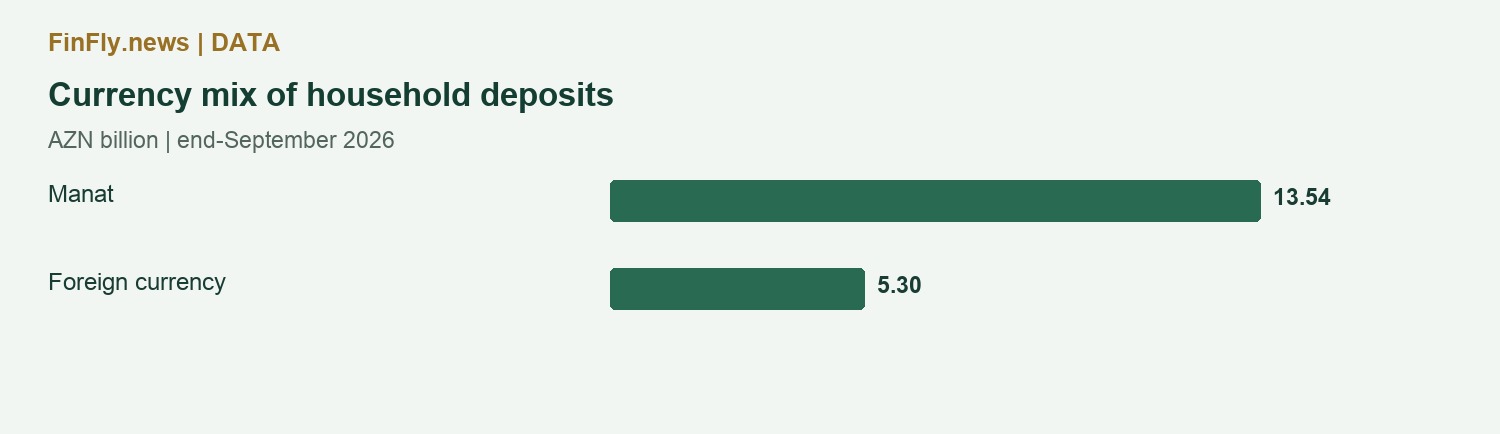
According to Table 2.13 of the CBA September bulletin, household deposits rose from AZN 18.21 billion to AZN 18.84 billion. Manat balances increased AZN 480.1 million and foreign-currency balances, expressed in manat, added AZN 148.2 million.
National-currency accounts supplied about 76.4% of the monthly increase. Their share reached 71.9%, leaving 28.1% in foreign currencies. The manat gained share while both components expanded, rather than because foreign-currency balances contracted.
Not all balances are term savings
Current accounts increased from AZN 6.69 billion to AZN 7.11 billion, while long-term balances rose from AZN 6.14 billion to AZN 6.34 billion. These are separate components, not an exhaustive two-part division of the total.
The table follows the IMF household definition and includes individual entrepreneurs. The increase therefore cannot all be described as spare personal savings: some balances support day-to-day payments and business activity.
| Measure, AZN billion | August | September |
|---|---|---|
| Total | 18.212 | 18.840 |
| Manat | 13.060 | 13.540 |
| Foreign currencies | 5.152 | 5.300 |
| Current accounts | 6.690 | 7.107 |
| Long-term balances | 6.144 | 6.336 |
The funding implication
More manat deposits expand the potential funding base for lending in the same currency. Stability depends on maturity, however: current-account balances can move more quickly than term deposits.
Understanding depositor behaviour requires both the currency mix and shifts between current and term accounts. September shows higher bank balances and a stronger manat share, but does not reveal each account holder’s motivation.