
Higher oil prices increase Azerbaijan’s potential export receipts. Yet several steps separate a benchmark quotation from the benefit to the economy: realised selling prices, shipment volumes, costs and the allocation of proceeds. Brent alone cannot establish the size of the gain.
The Energy Ministry’s preliminary January-September 2026 figures put oil and condensate production at 19.9 million tonnes and exports at 15.5 million tonnes. These are nine-month physical volumes. They neither measure budget receipts nor constitute a full-year forecast.
The price increase needed to offset lower volumes
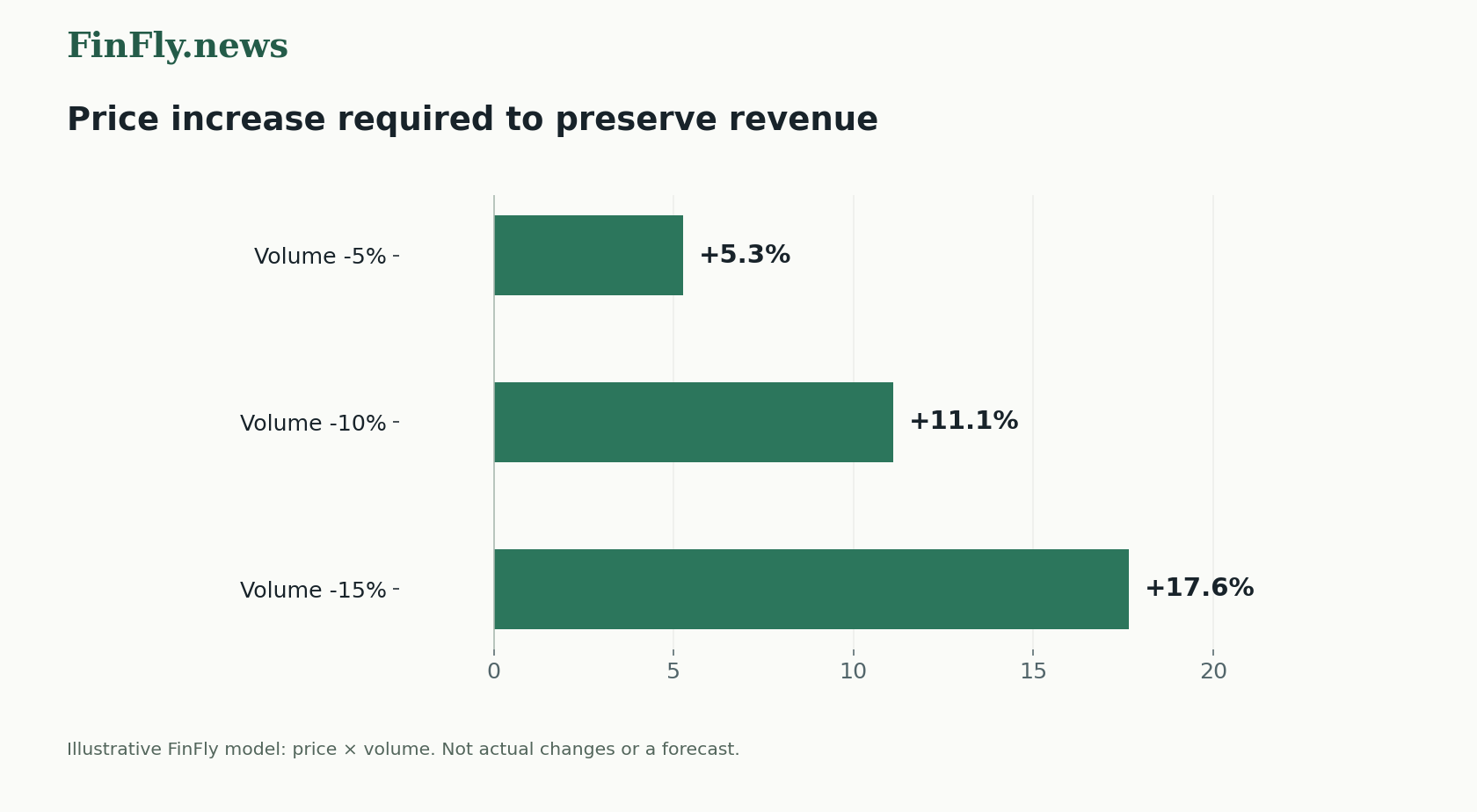
Gross sales revenue equals volume multiplied by the average realised price. If volume falls 10%, price must rise 11.1% to keep revenue unchanged. A 10% price increase is insufficient: multiplying 0.9 by 1.1 gives 0.99, leaving revenue 1% below its starting level.
The illustration below starts with price, volume and revenue each indexed to 100. It is a sensitivity calculation, not an estimate of an actual production decline or a forecast of Azerbaijan’s oil income.
| Volume change | Price increase needed to preserve revenue |
|---|---|
| Unchanged | 0% |
| Down 5% | 5.3% |
| Down 10% | 11.1% |
| Down 15% | 17.6% |
Export receipts are not budget revenue
Gross export value includes proceeds attributable to different project participants. It cannot be converted directly into government revenue without information on costs, contractual arrangements, taxes and settlement timing. The same price increase can produce different fiscal outcomes across projects with different cost structures.
A shipment’s realised price also differs from an international benchmark. Crude quality, delivery terms and the sale date matter. Applying today’s quotation to exports over the preceding nine months would create a hypothetical figure that could easily be mistaken for actual receipts. A revenue assessment needs the realised average price over the matching period.
Higher import costs can absorb part of the benefit
The International Energy Agency’s October oil report describes pressure from expensive freight and crude on refining in Europe and Asia. For an exporting economy, this illustrates the other side of an oil rally: higher receipts can coincide with more expensive transport and imported goods.
Quantifying that effect for Azerbaijan requires a separate calculation using its import mix. It cannot simply be equated with the increase in oil receipts. Nor should higher crude prices be treated as an equal benefit to every business and household: exporters and buyers of imported products face different consequences.
Three figures that will determine the outcome
A useful assessment of the next reporting period needs three comparable series: physical export volume, actual shipment value and government receipts. They establish how much was sold, the average price received and the amount reaching public finances. Together, these figures distinguish temporary price support from a sustained increase in income.