Banks’ structural liquidity surplus rose to 2.2 times its December level. Lower interbank rates reflect changing money-market conditions, while loan pricing also depends on borrower risk and funding maturity.
Liquidity growth and AZIR dynamics
The CBA October release puts the structural liquidity surplus at AZN 6.2 billion at end-September, 2.2 times its December level. Excluding required reserves, the measure reflects the gap between the central bank’s liabilities to banks and its claims on them.
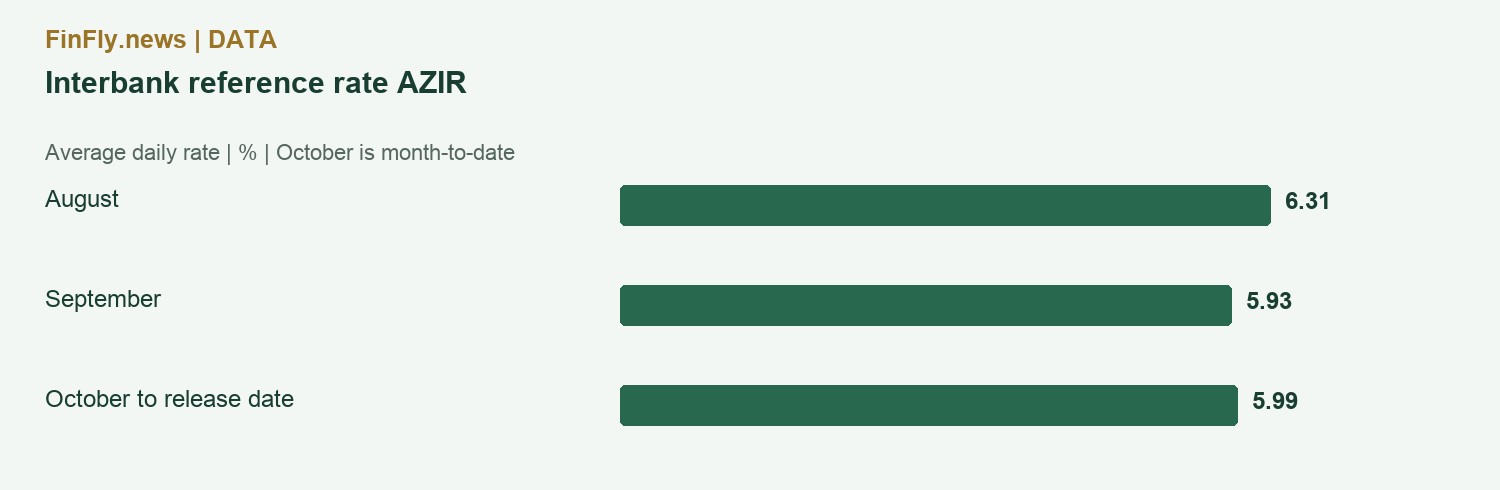
Average daily AZIR was 6.31% in August, 5.93% in September and 5.99% in October to date. September was 0.38 percentage point below August. October is an incomplete observation and its monthly average can still change.
Transmission to lending rates
The AZN 6.2 billion surplus measures the banking system’s aggregate position with the central bank. It does not determine the volume of potential business lending. Liquidity is unevenly distributed, while lending also depends on capital, funding maturity and the quality of applications.
A bank can be liquid and still charge a high rate to a borrower with volatile revenue. Short-term interbank funding and a multi-year unsecured loan carry different risks. These differences account for the spread between their interest rates.
| Measure | Value | Period |
|---|---|---|
| Structural liquidity surplus | AZN 6.2bn | End-September |
| Multiple of December level | 2.2 times | September / December |
| Seven-day deposit operation share | 66.4% | Sterilisation portfolio, end-September |
Liquidity management instruments
The regulator mainly uses seven-day deposit operations to manage liquidity. At end-September they accounted for 66.4% of the sterilisation portfolio through open-market operations. These transactions temporarily place part of the liquidity with the CBA.
Lower funding costs can support improved credit terms when accompanied by bank competition and acceptable project risk. Borrower cash flow and debt-servicing capacity remain central to credit assessments.