
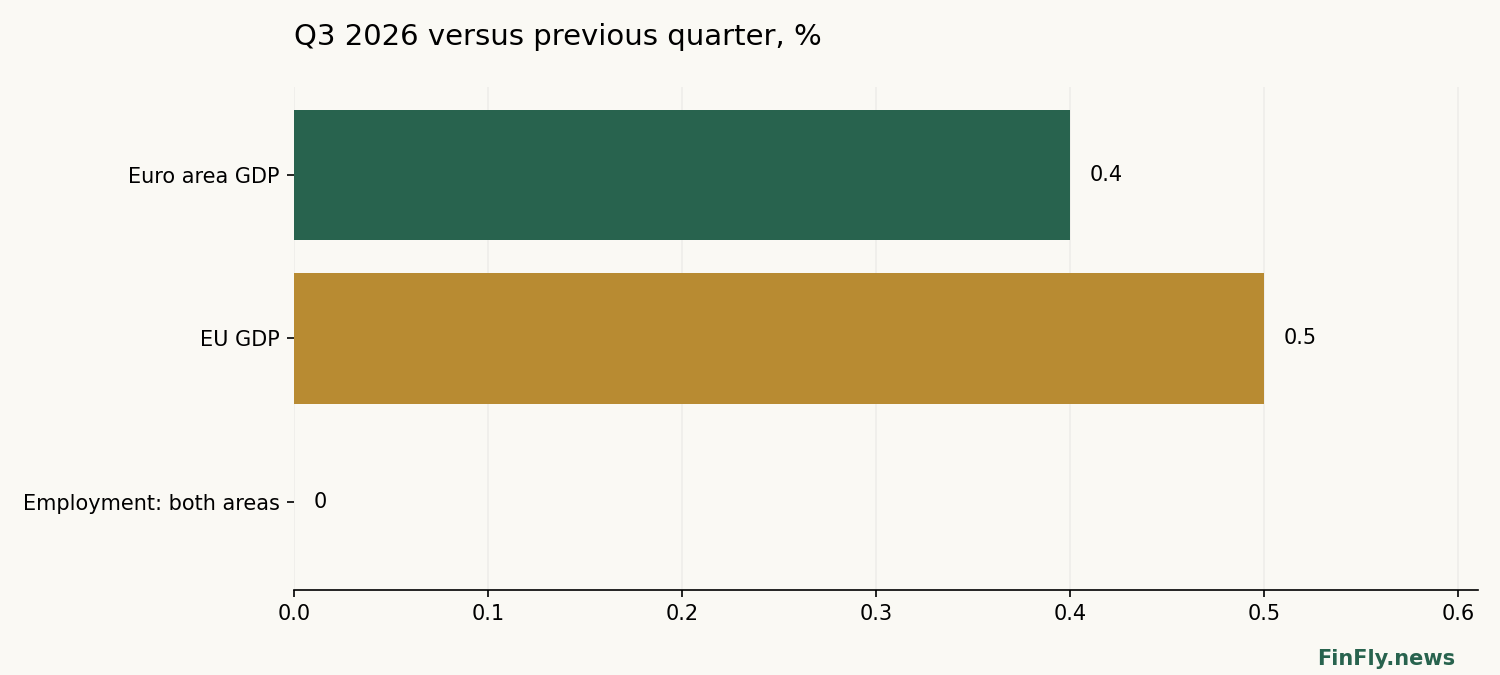
Euro area GDP rose 0.4% in the third quarter from the preceding quarter, while EU GDP gained 0.5%. Employment was stable in both, according to Eurostat's November 13 flash estimate, adjusted for seasonality.
| Indicator | Value |
|---|---|
| Euro area GDP | 0.4 |
| EU GDP | 0.5 |
| Employment: both areas | 0 |
More output, unchanged headcount
Positive GDP growth alongside stable employment means additional output has not been accompanied by a net increase in workers. Companies may be using existing capacity and teams more intensively. But the aggregates do not reveal whether longer working hours, a change in the production mix or greater efficiency account for the result.
They also provide no basis for attributing the outcome to automation or artificial intelligence. That would require sectoral evidence, investment data and hours worked. Output per employed person and productivity per hour are different measures.
The demand implication
Consumer markets depend both on new jobs and on the earnings of people already employed. Stable headcount does not mean incomes have stopped growing, but it limits one channel through which demand can expand.
For businesses selling into Europe, sector-specific orders are more useful than applying headline GDP growth to a sales forecast. Higher output can coexist with cautious hiring. Working hours, wages and new orders will help test the durability of the recovery. These preliminary national-accounts estimates remain subject to revision.