Azerbaijan’s insurers ceded approximately AZN 74 million in reinsurance premiums during the first half of 2026. The Central Bank reports 23% growth from the corresponding period a year earlier. Cessions represented about 8.6% of total insurance premiums.
The shift in destination is more striking than the overall increase. The Central Bank’s reinsurance-flow chart shows AZN 57 million going to foreign reinsurers, up from AZN 35 million. Domestic partners received AZN 17 million, down from AZN 26 million. The chart uses rounded figures.
Foreign placements take a larger share
Foreign placements represent approximately 77% of current ceded premiums, compared with around 57% in the previous first-half comparison. Reinsurance remains predominantly a non-life instrument.
Non-life insurers ceded AZN 70.7 million and life insurers AZN 3.6 million. Cessions represented about 20% and 0.7% of their respective premium volumes. Rounded components need not sum precisely to the rounded sector total.
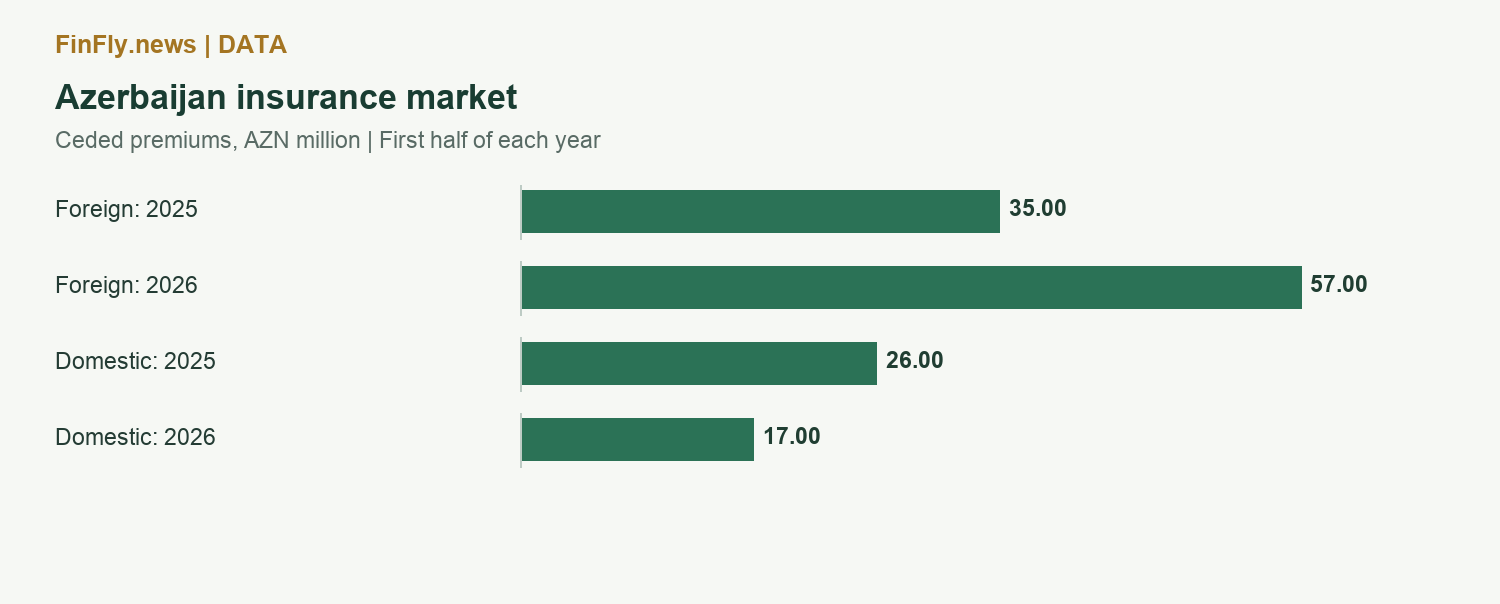
| Destination, AZN m | H1 2025 | H1 2026 |
|---|---|---|
| Foreign reinsurers | 35 | 57 |
| Domestic reinsurers | 26 | 17 |
Ceded premiums purchase protection
Reinsurance shares a large exposure with another participant. It allows a local insurer to limit losses from an individual event and accept obligations that would be difficult to retain in full.
Higher payments abroad should therefore not automatically be described as money lost by the industry. The premium buys coverage. Its value depends on contract terms, limits, exclusions and the partner’s ability to honour its obligations.
Counterparty exposure remains
Transferring risk does not eliminate the need to manage it. Reinsurer quality, timely recoveries and alignment between the original policy and the reinsurance contract all matter.
Aggregate flows cannot establish whether the change reflects coverage prices, individual large transactions or revised limits. They do show that foreign partners have become more important to the distribution of Azerbaijan’s insurance risks. The next question is how well that protection matches the obligations insurers retain on their own balance sheets.