
The reported revenue-spending gap
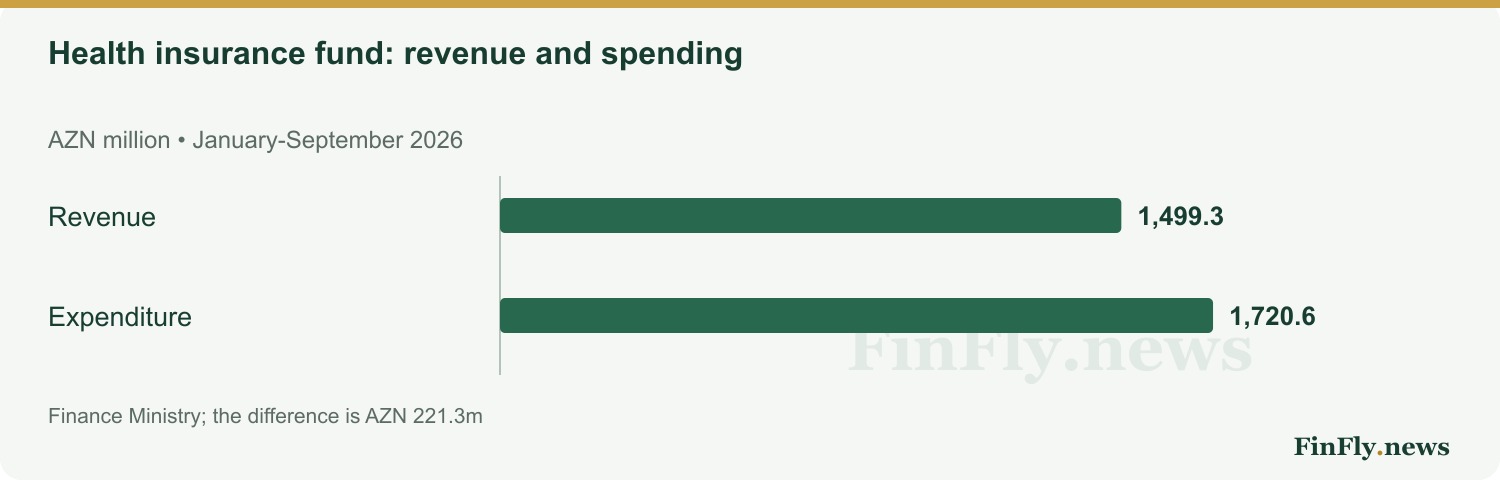
Azerbaijan’s Compulsory Health Insurance Fund spent AZN 1,720.6 million in January-September against revenue of AZN 1,499.3 million. Spending exceeded revenue by AZN 221.3 million. Both figures appear in the Finance Ministry’s preliminary consolidated-budget execution report published on October 29.
Expenditure was 14.8% higher than revenue for the period. Measured against expenditure instead, the gap was 12.9%. These ratios describe the same difference using different denominators; neither is a year-on-year spending-growth rate.
Why the difference does not prove a cash shortage
The negative nine-month balance establishes that receipts in that period did not cover all recorded expenditure. It does not show the fund’s opening resources, the balances it could draw on or the monthly timing of receipts.
The published summary provides no separate reconciliation of how this difference was financed. It would therefore be unsupported to say either that accumulated balances definitely covered the gap or that unpaid obligations to medical providers arose. Both conclusions require additional evidence.
Nor should fund expenditure be added mechanically to the state budget’s healthcare function without checking transfers and consolidation. These are different reporting levels, and adding them can create double counting.
| Measure | Value |
|---|---|
| Revenue | AZN 1,499.3m |
| Expenditure | AZN 1,720.6m |
| Spending above revenue | AZN 221.3m |
| Gap / expenditure | 12.9% |
The next disclosure needed is a financing reconciliation
A sustainability assessment requires more than the size of the difference. Opening and closing balances, the mix of contributions and budget receipts, payment schedules and settlements with medical providers are needed. Without them, a temporary timing mismatch cannot be distinguished from persistent financing pressure.
For patients, these figures alone imply neither a reduction in covered services nor a change in access to treatment. The budget execution report announces no such decisions. For medical organisations, actual contractual payment performance is more informative than assumptions based on one aggregate balance.
The nine-month result identifies an issue to monitor: whether spending continues to exceed revenue and which resources cover that difference. It does not yet justify a conclusion that the system is in crisis, or the opposite claim that it faces no financing risks.
Cover: an AI-generated editorial illustration by FinFly.news.