South Korea has 16 cities in the global top 1,000 of the StartupBlink Global Startup Ecosystem Index 2026, including six new entries. Seoul remains the dominant hub, while rapid growth in smaller cities is broadening the country’s startup geography.
Daegu climbed 272 places to 419th, with score growth of 254.9%. Gwangju gained 191 places and Jeju 232. Seoul’s 7.4% growth is much slower, but its total score remains substantially higher.
| Ecosystem | Global rank | Score | Score change, % |
|---|---|---|---|
| Seoul | 20 | 51.554 | 7.4 |
| Daegu | 419 | 1.052 | 254.9 |
| Gwangju | 509 | 0.697 | 140.9 |
| Jeju-si | 620 | 0.466 | 143.4 |
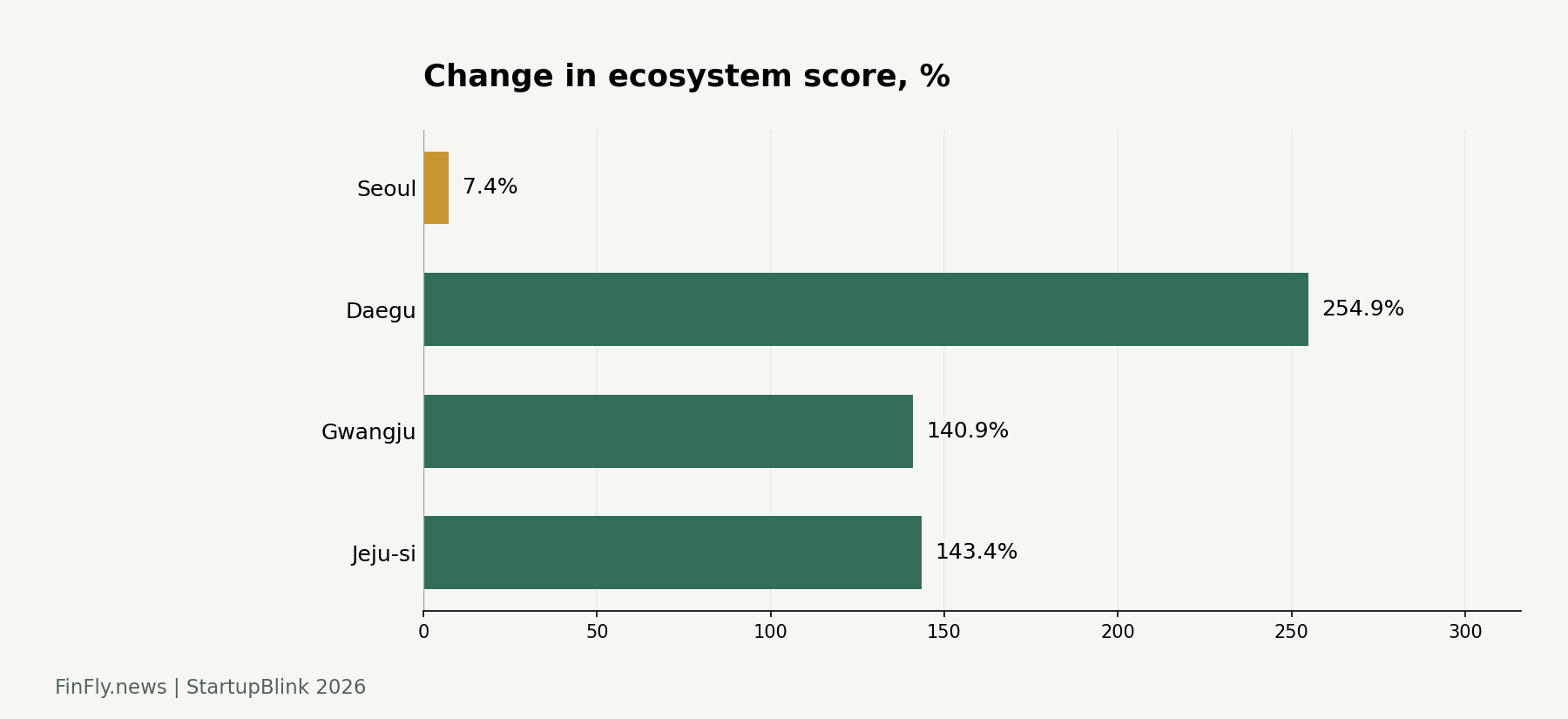
Percentages do not erase scale differences
Seoul’s score is almost 49 times Daegu’s. The latter’s 254.9% increase therefore represents strong progress from a small base rather than the emergence of a closely matched rival.
Improved ranking visibility may help smaller hubs attract attention from potential partners. Available expertise, customer demand and investment activity still require separate assessment.
A wider map has practical value
More ranked locations give businesses a reason to examine the country beyond one major centre. That can matter when seeking particular industry contacts, research links or local partners.
The index does not establish that smaller cities are cheaper than Seoul or better suited to a specific technology. Costs and specialisations need their own evidence.
The next indicators to watch
South Korea ranks 19th nationally, with 20.6% score growth. Future evidence should show whether emerging hubs retain their positions and generate repeat investment and expanding sales.
The 2026 result combines a wider geographical footprint with continued concentration in Seoul. Regional development and the capital’s dominant scale can coexist.