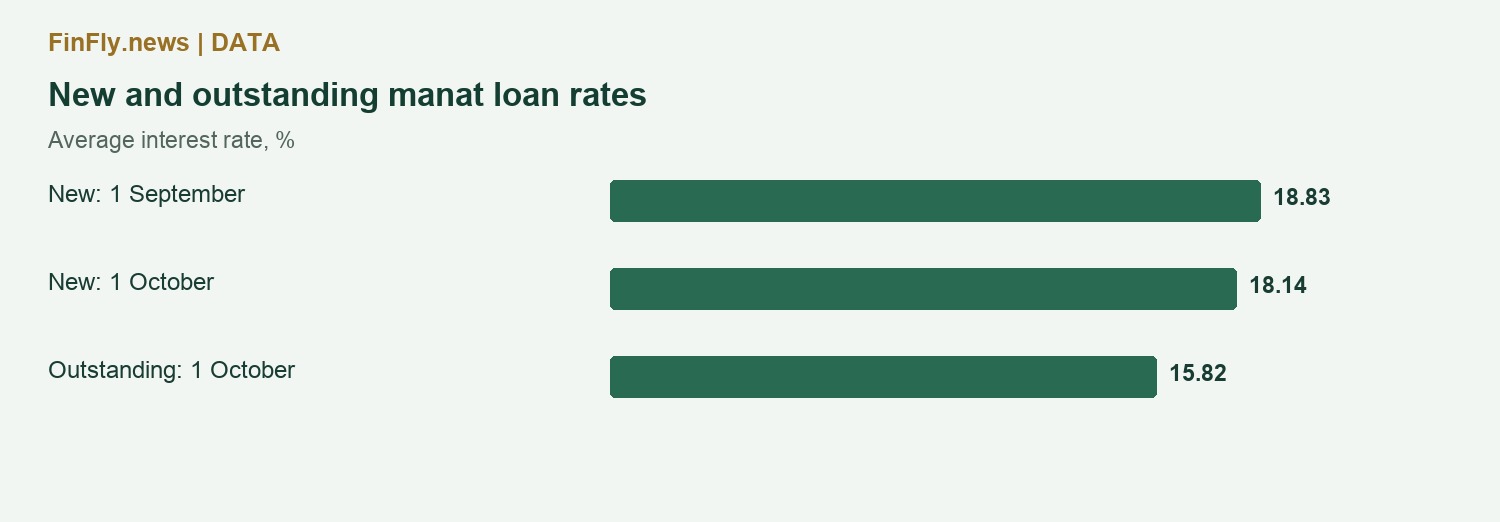
At 1 October, the average rate on new manat loans was 18.14%, against 15.82% on outstanding manat lending. The two measures moved in opposite directions over the month.
What changed in new business
In Table 3.2.1 of the CBA bulletin, the new manat lending rate fell from 18.83% at 1 September to 18.14% at 1 October, a decline of about 0.69 percentage points. The foreign-currency rate decreased from 6.01% to 5.82%.
New manat time deposits became more expensive for banks: their average rate increased from 8.10% to 8.28%. The simple gap between new lending and deposit rates narrowed, but that gap is not a bank’s interest margin.
Why outstanding loans behaved differently
Table 3.2 uses a different base: the rate on outstanding manat loans edged up from 15.79% to 15.82%. That portfolio contains contracts of different vintages, maturities and types. New business changes its composition gradually, alongside repayments.
New lending exceeded the portfolio rate by 2.32 percentage points in the October snapshot. This does not automatically change payments on existing loans; each contract has its own terms.
| Rate, % | 1 September 2026 | 1 October 2026 |
|---|---|---|
| New manat loans | 18.83 | 18.14 |
| Outstanding manat loans | 15.79 | 15.82 |
| New manat time deposits | 8.10 | 8.28 |
| New FX loans | 6.01 | 5.82 |
Reading the signal
September brought a lower average price for new borrowing. The data do not isolate tariff changes from shifts in the borrower and product mix. A larger share of cheaper transactions can also lower an average.
Assessing bank profitability requires the cost of all funding sources, provisions and operating expenses. The gap between two average rates indicates direction but cannot replace an income statement.